Dental Implant Cost in 2026: What One Tooth Really Costs
A single dental implant in the US typically costs $3,000 to $6,000 all-in. That covers the implant post, the abutment, and the crown. National averages for a complete single-tooth implant land between roughly $3,100 and $4,500, but your final bill depends on where you live, who does the surgery, and whether you need extras like bone grafting.
That wide range is exactly why implant pricing feels confusing. One clinic quotes $1,999, another quotes $6,500, and both claim to be talking about the same thing. They’re usually not. This guide breaks down what each part costs, what drives the price up or down, what insurance actually covers, and how to avoid overpaying without cutting corners on quality.
Quick answer: A single dental implant costs $3,000-$6,000 in the US, covering the titanium post, abutment, and crown. The full process takes 4-8 months. Many dental plans cover part of the cost. Check your coverage by procedure code before treatment.
What you’re actually paying for: the 3 parts of an implant
A dental implant isn’t one thing, it’s three components, often billed separately. Understanding this is the single most useful thing you can do before comparing quotes. For the ADA’s patient-friendly overview of how implants work, see MouthHealthy, the American Dental Association’s site for patients.
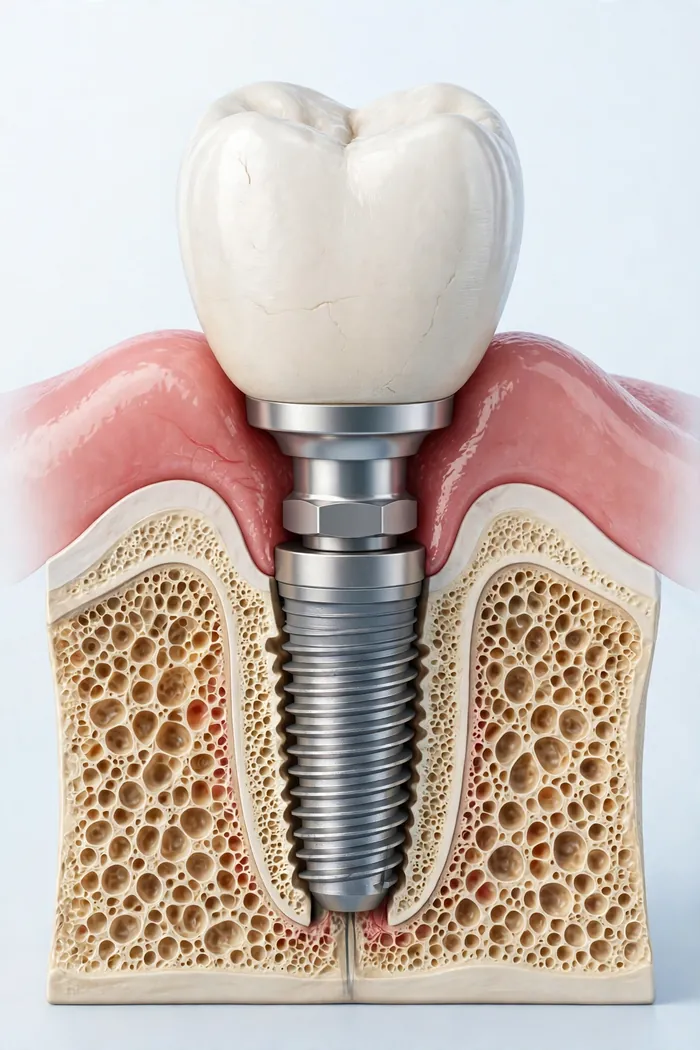
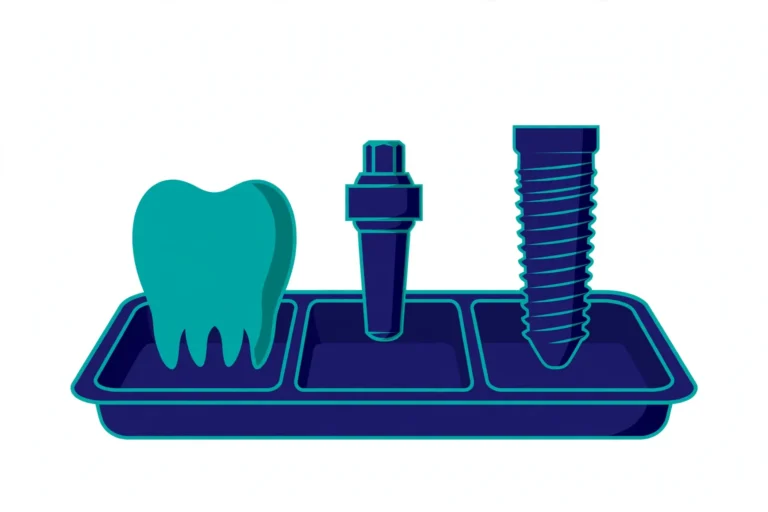
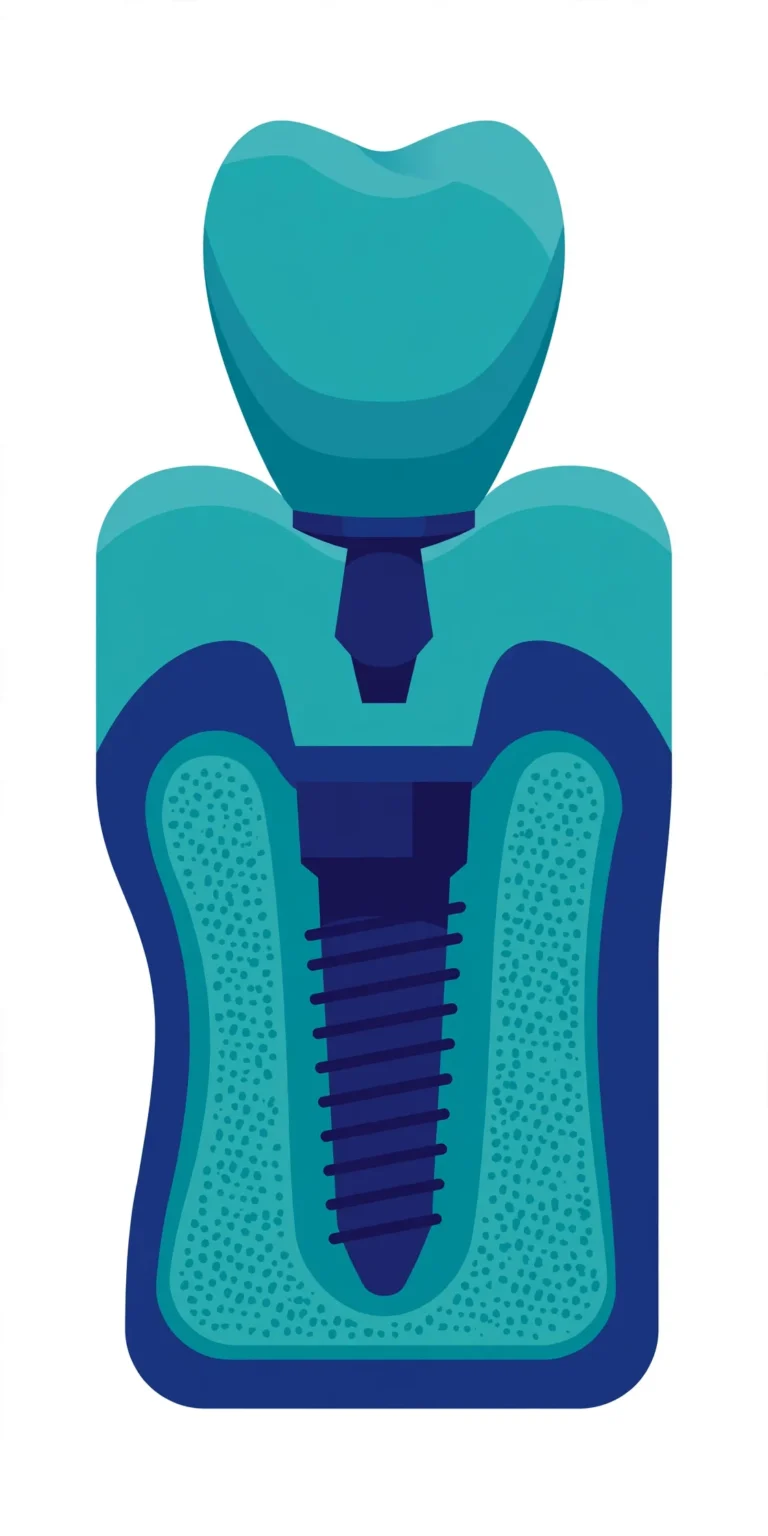
The three parts of a dental implant: the titanium post, the abutment connector, and the crown.
1. The implant post (fixture): $1,000 to $3,000. This is the titanium screw placed into your jawbone during surgery. It acts as an artificial tooth root. Premium implant brands cost more than budget systems, and your dentist’s choice here affects both price and long-term reliability.
2. The abutment: $300 to $500. A small connector piece that joins the post to the crown. Some quotes bundle it with the post; others list it separately. Always ask.
3. The crown: $1,000 to $3,000. The visible artificial tooth, custom-made to match your natural teeth. Porcelain and zirconia crowns cost more than porcelain-fused-to-metal, but they look better, especially for front teeth.
Add in the consultation, X-rays or 3D scan ($150-$400), and possible extras, and you can see how a “$1,999 implant” advertised online becomes $5,000+ at checkout. Always ask for an itemized treatment plan before you commit.
Dental implant costs by treatment type (2026)
| Treatment | Typical US range |
|---|---|
| Single implant (post + abutment + crown) | $3,000-$6,000 |
| Multiple implants (2-3 teeth) | $8,000-$20,000 |
| All-on-4 (full arch) | $15,000-$30,000 per arch |
| Full mouth restoration | $30,000-$60,000+ |
These are national ranges. Large cities and coastal states trend higher; smaller markets and the Midwest tend to cost less. A surgical specialist (oral surgeon or periodontist) usually charges more than a general dentist, but for complex cases, that expertise is worth paying for.
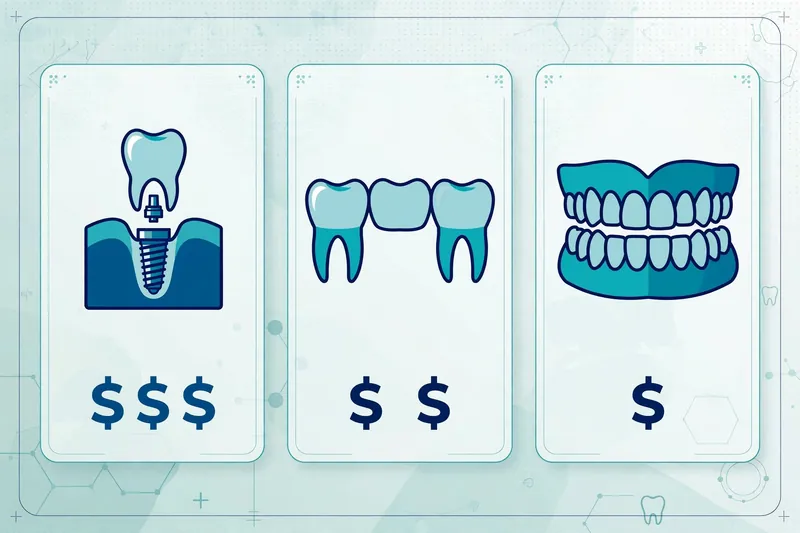
Implants cost more upfront than bridges or dentures, but often cost less per year over their lifespan.
7 factors that change your implant price
1. How many teeth you’re replacing. One implant is straightforward. Full-arch work like All-on-4 uses 4-6 implants to support an entire row of teeth, which changes the math completely.
2. Bone grafting. If you’ve been missing the tooth for a while, the jawbone may have shrunk. A bone graft ($400-$1,200+) rebuilds it before the implant can go in. Not everyone needs one, but it’s one of the most common add-ons.
3. Tooth extraction. If the damaged tooth is still there, removing it adds $150-$400 to the bill.
4. Your location. Implant costs in New York or Los Angeles can run 30-50% higher than in smaller cities. This is also why some patients consider traveling, though follow-up care gets complicated.
5. The provider’s credentials. Oral surgeons and periodontists typically charge more than general dentists. For a simple single implant, an experienced general dentist is often fine. For full-mouth work, see a specialist.
6. Implant brand and crown material. Premium systems cost more than lesser-known brands. Zirconia crowns cost more than standard porcelain, worth it for visible front teeth.
7. Sedation. Local anesthesia is usually included. IV sedation or general anesthesia adds $400-$1,000+.
How long does the whole implant process take?
One reason implant quotes confuse people is that treatment spans months, not days. A typical timeline:
- Consultation and imaging: 1 visit. Your dentist takes X-rays or a 3D scan and confirms you’re a candidate.
- Surgery day: the post goes in under local anesthesia, usually in under an hour for a single implant.
- Healing (osseointegration): 3 to 6 months. The bone fuses around the titanium post. This waiting period is normal and necessary. It’s what makes implants so durable.
- Abutment and crown: 2 to 3 visits over a few weeks. Impressions are taken, the crown is made, and it’s fitted and adjusted.
From first visit to final crown, expect 4 to 8 months for a straightforward case. Bone grafting adds 3-4 months. “Teeth in a day” options exist for full-arch cases, but single implants shouldn’t be rushed. Anyone promising a complete implant in one appointment is cutting the healing step that makes implants work.
Watch out for bait pricing
Ads for “$999 implants” follow a pattern: the advertised price covers only the implant post, quoted for the simplest possible case, at a clinic you’ve never heard of. By the time the abutment, crown, imaging, and any grafting are added, the real number lands near the national average anyway.
That’s not to say every low price is a scam. Legitimate ways to see low numbers include new-patient specials at reputable practices, dental school clinics, and high-volume implant centers with streamlined workflows. The difference is transparency: an honest clinic shows you the itemized total upfront. A bait advertiser reveals the real price at the payment desk.
Rule of thumb: if a quote is more than 40% below the quotes from two other providers, ask exactly what makes it cheaper, and get the answer in writing.
Does dental insurance cover implants?
Sometimes, but rarely in full. Many dental plans classify implants as a cosmetic or elective procedure and exclude them. However, coverage is improving: some plans now cover 50% of the implant cost up to your annual maximum (often $1,500-$2,000).
A few things worth knowing:
- Medical insurance may contribute if tooth loss resulted from an accident or medical condition. It’s a long shot, but worth asking about.
- Medicare generally doesn’t cover dental implants, though some Medicare Advantage plans include limited dental benefits.
- Medicaid coverage varies by state, a few states cover implants when medically necessary.
- Your plan is more likely to cover the crown portion than the surgical post, so ask your insurer to break down coverage by procedure code.
Call your insurer before your consultation and ask specifically: “What is my coverage for procedure code D6010 (implant placement) and D6058 (implant crown)?” That one question can save you hours of confusion later.
6 ways to lower your implant cost without risking quality
1. Get 2-3 itemized quotes. Prices vary enormously between providers. Comparing itemized plans, not headline prices, is the fastest way to spot overcharging.
2. Ask about bundled pricing. Some practices discount the full treatment (post + abutment + crown) when you commit to the whole plan with them.
3. Consider a dental school. University dental clinics often charge 30-40% less, with work performed by supervised students or residents. Treatment takes longer, but the savings are real.
4. Use HSA or FSA funds. Implants are an eligible medical expense, so paying with pre-tax dollars effectively gives you a 20-30% discount.
5. Ask about payment plans. Many practices offer in-house financing or work with lenders like CareCredit. A 0% APR 12-month plan spreads the cost with no interest.
6. Time it across benefit years. If your treatment spans two calendar years, you can use two years’ worth of annual maximums, potentially doubling your insurance contribution.
Implants vs. alternatives: the long-term math
Implants look expensive next to a bridge ($2,000-$5,000) or partial denture ($1,000-$3,000). But implants last 15-20+ years with basic care, while bridges typically need replacement every 10-12 years and dentures every 5-7.
Over 20 years, a single implant often ends up cheaper per year than the alternatives, and it preserves your jawbone, which bridges and dentures don’t. The cheapest option today isn’t always the cheapest option over time.
How to choose an implant dentist (and red flags to avoid)
Price matters, but the cheapest quote isn’t the goal, the best value is. When evaluating providers:
- Read Google reviews specifically mentioning implants, not just general dentistry. Patterns in reviews reveal more than star ratings: here’s how to read dental clinic reviews.
- Ask how many implants they place per year. Experience correlates strongly with success rates. Fifty-plus per year is a good sign.
- Demand transparent, itemized pricing. Vague quotes are a red flag. Unclear pricing is one of the classic warning signs on clinic websites, and it applies in person too.
- Check what’s included. Does the quote cover follow-up visits? What happens if the implant fails in year one? Get it in writing.
- Understand how patients find top implant dentists. Most people start on Google, see how dentists rank on Google to know what separates strong clinics from weak ones.
Are you a dentist? Patients researching implant costs are among the highest-intent visitors a practice website can attract. Here’s how clinics get more dental patients from that traffic and the marketing mistakes that drive them away.
Frequently asked questions
How much does a dental implant cost for one tooth?
A complete single-tooth implant (post, abutment, and crown) typically costs $3,000-$6,000 in the US. Quotes under $2,500 usually cover only the post. Always confirm what’s included.
Why do dental implants cost so much?
You’re paying for surgery, medical-grade titanium, a custom-made crown, 3D imaging, and the dentist’s specialized training. The materials and expertise involved are closer to orthopedic surgery than to a filling.
How long do dental implants last?
With good oral hygiene, implants can last 20+ years, often a lifetime. The crown may need replacement after 10-15 years, but the titanium post rarely does.
Does insurance cover dental implants?
Some plans cover part of the cost (often up to 50% of the annual maximum). Many still exclude implants entirely. Check your specific plan’s coverage for implant procedure codes before treatment.
Are cheap dental implants safe?
A low price isn’t automatically dangerous, dental schools and high-volume clinics genuinely cost less. But be cautious of quotes far below market rate that can’t explain what’s included. Knowing what dental SEO is helps you see through too-good-to-be-true advertising.
Can I get dental implants if I have bone loss?
Often yes, with a bone graft first. Your dentist will confirm with a 3D scan whether your jawbone can support an implant directly.
The bottom line
Disclaimer: This article is for informational purposes only and is not medical advice. Implant treatment should be planned with a licensed dentist or oral surgeon who can evaluate your individual case.
Dental implants cost $3,000-$6,000 per tooth in most of the US, more for complex cases, less if you shop smart. The biggest mistake isn’t choosing implants; it’s comparing headline prices instead of itemized treatment plans.
Get your quotes in writing, check what’s actually included, verify your insurance coverage by procedure code, and choose experience over the lowest bid. Do that, and you’ll pay a fair price for teeth that can last decades.
About Rankex Solutions
Rankex Solutions works on local SEO and Google Business Profile optimization for businesses in the UAE and the US. Its background is in rank-and-rent SEO and freelance search marketing.