How Do Dental Implants Work? The Process Step by Step
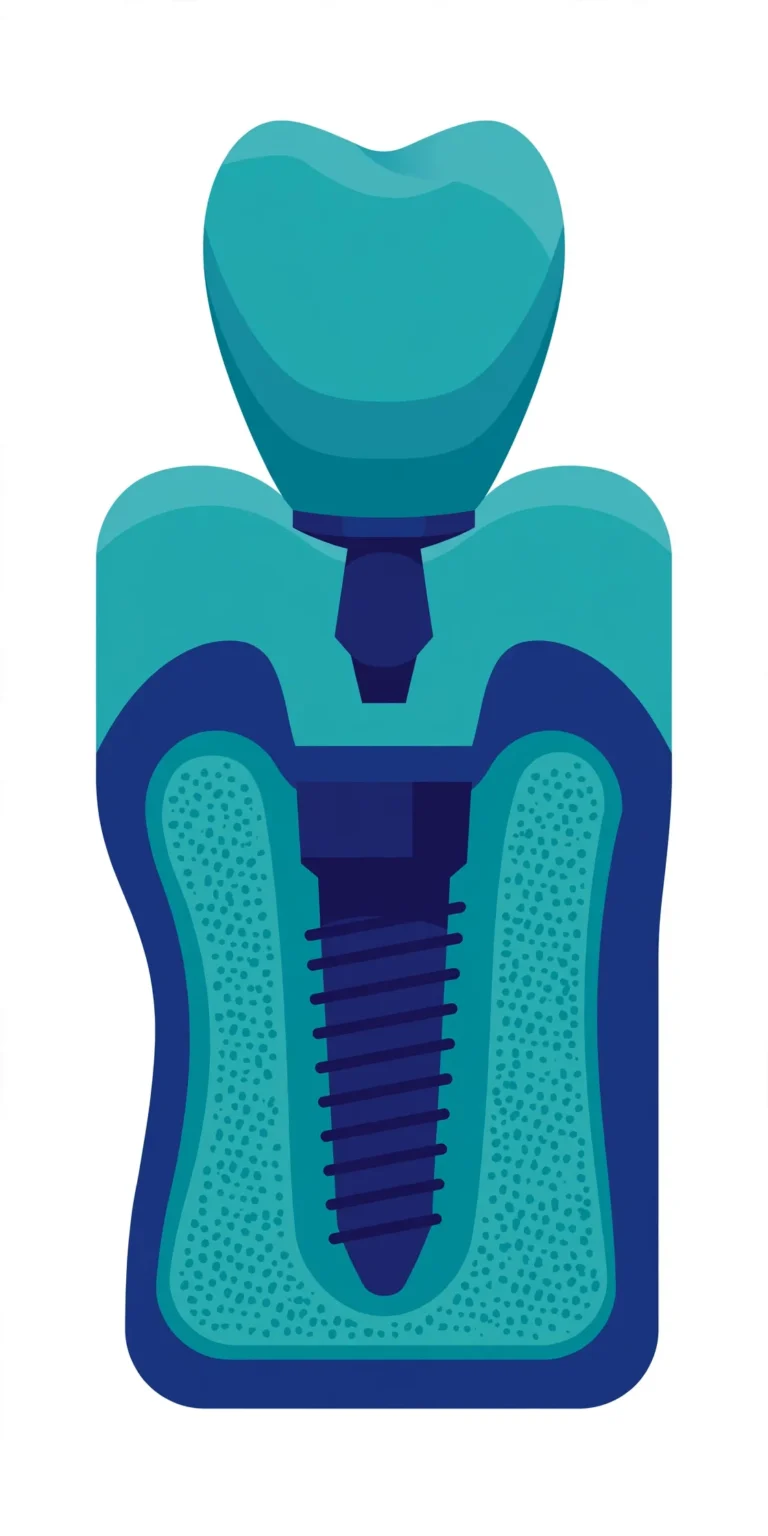
A dental implant is not one piece of hardware. It is a three-part system that teams up with your jawbone to replace a missing tooth root. If you have ever asked how do dental implants work below the gumline, the short answer is part biology and part engineering: a titanium post bonds directly with living bone, and that bond carries every bite you take.
This article focuses on the science, not the schedule. You will learn what each part of the system does, how bone cells lock onto titanium, how chewing forces move through an implant into the jaw, and why that process stops the bone loss that follows a lost tooth. Appointment-by-appointment details stay brief here, because our walkthrough of the implant procedure steps covers those in full.
Quick answer: A dental implant has three parts. A titanium post replaces the root and fuses with the jawbone. An abutment joins the post to a crown. Bone cells grow onto the titanium in a process called osseointegration. That bond transfers chewing force into the jaw, which keeps bone dense and stops the bone loss that follows extraction.
How Do Dental Implants Work? The Three-Part System
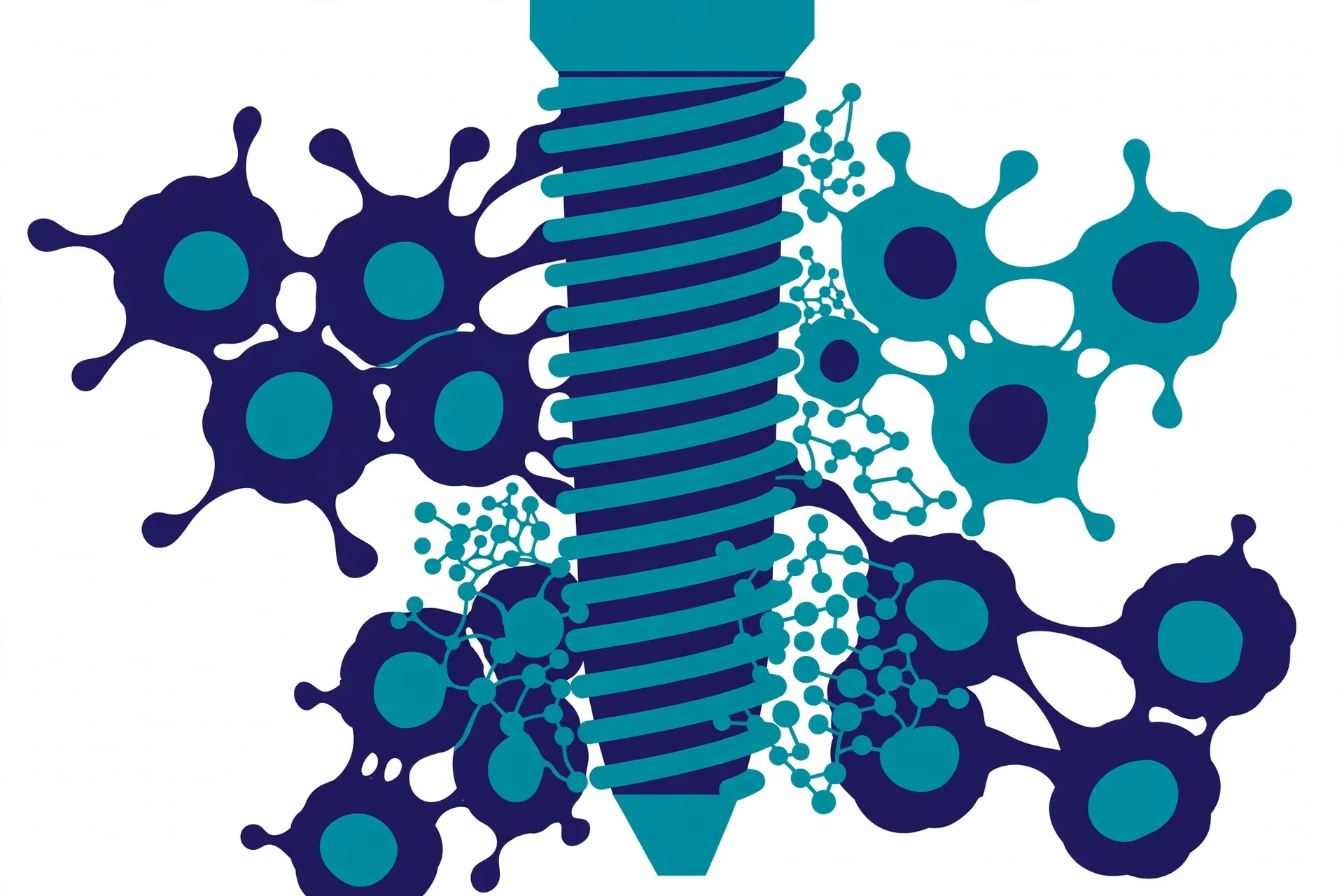
Think of an implant as a replacement root with a tooth built on top. Each of the three parts has one job, and the system only works when all three do theirs.
| Part | Where it sits | Job it does |
|---|---|---|
| Implant post (fixture) | Inside the jawbone | Acts as the artificial root and bonds with bone |
| Abutment | At the gumline | Connects the post to the crown |
| Crown | Above the gumline | Looks and chews like a natural tooth |
The implant post is a small threaded screw, usually made of titanium. Your dentist or oral surgeon places it into the jawbone where the old root used to be. The threads are not just for grip during placement. They also give bone cells more surface to grab onto during healing.
The abutment is a small connector that screws into the top of the post. It pokes just above the gumline and gives the crown something solid to attach to. Some abutments are placed at the same visit as the post. Others go in after healing, once the bone bond is strong.
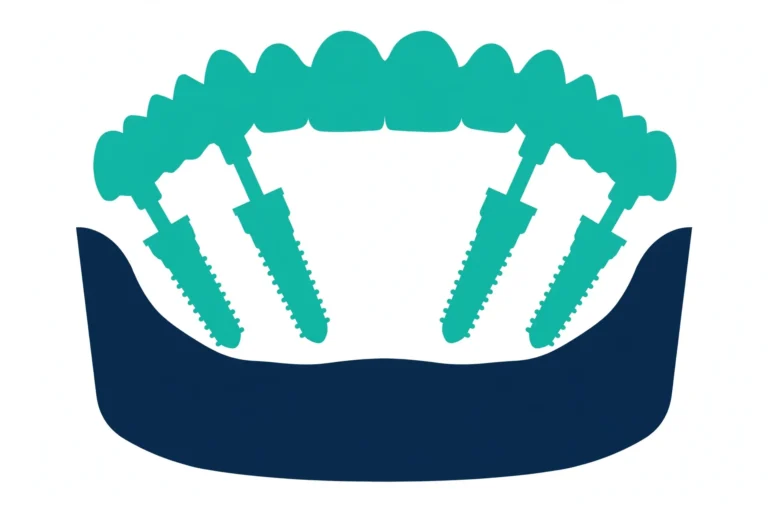
The crown is the visible tooth. A dental lab shapes it to match your bite and blends its color with your neighboring teeth. It can be screwed or cemented onto the abutment. If you are comparing single posts with full-arch designs, our guide to the types of dental implants lays out the options.
Osseointegration: How Bone Fuses to Titanium
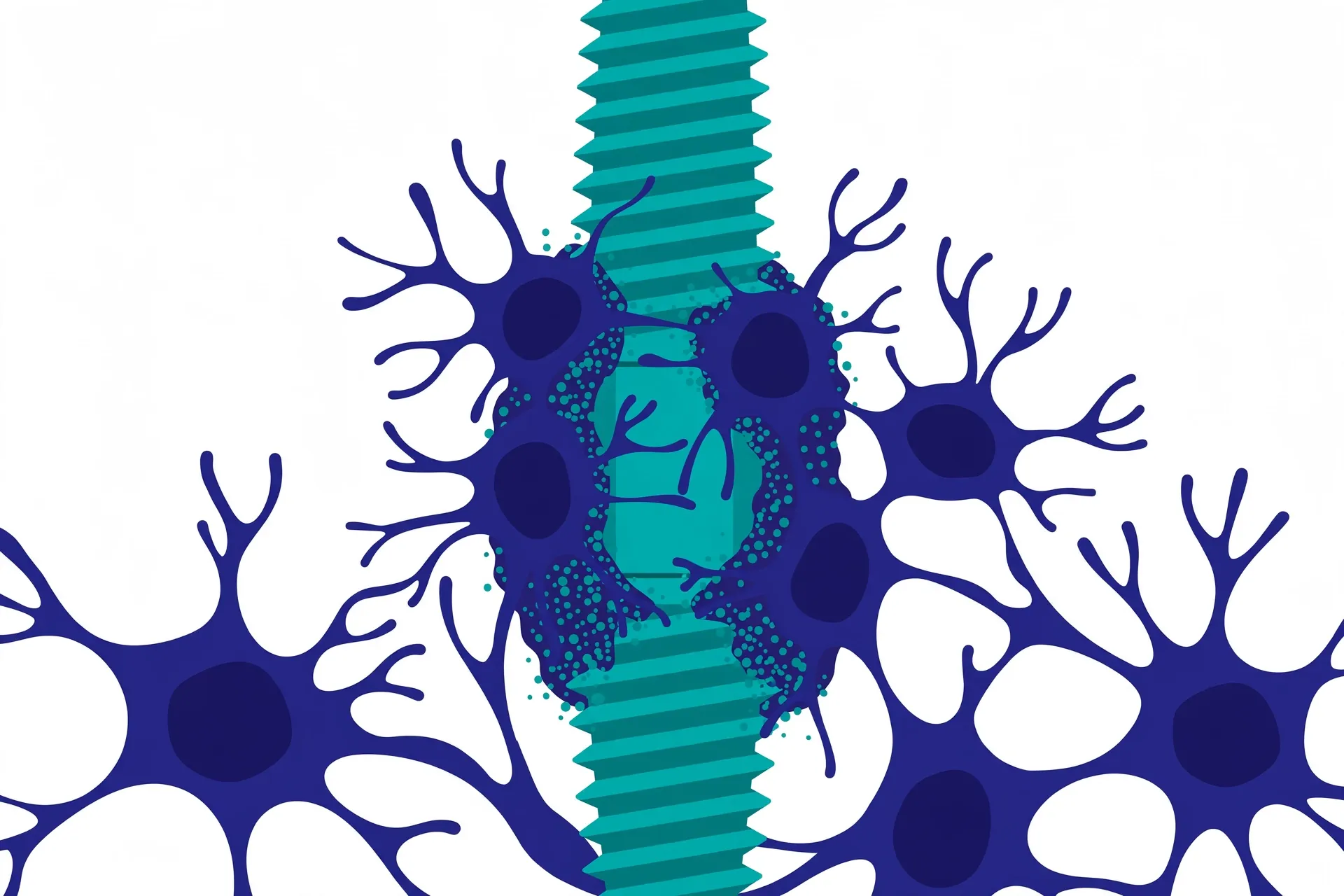
Osseointegration is the biological heart of the whole system. The word means “bone combines with,” and it describes what happens when living bone grows directly onto the surface of the titanium post. There is no glue and no cement. The bond is cellular.
Here is what happens after the post goes in. First, a blood clot forms around the threads, just like with any healing wound. Proteins from the blood coat the titanium surface within hours. Then bone-building cells called osteoblasts migrate to the area and start laying down new bone. At first this bone is soft and disorganized, a kind of biological scaffolding. Over the following weeks and months, the body replaces it with dense, mature bone that locks into every thread.
The full process typically takes 3-6 months. That range is not padding. Bone simply needs that much time to remodel from soft scaffolding into load-bearing tissue. The lower jaw is denser and often heals at the faster end. The upper jaw is softer and more porous, so it often needs the longer end.
Why the Body Accepts Titanium
Most metals would trigger a foreign-body reaction. Titanium gets a pass because of a thin oxide layer that forms on its surface the instant it meets air or fluid. Your immune system reads that oxide layer as calm and stable, so it does not attack the post. Instead, bone cells treat it like a surface worth building on.
Implant makers also roughen the post surface on purpose. A slightly textured surface gives osteoblasts more to hold, the way paint grips better on sanded wood. This is one reason modern implants integrate more predictably than the smooth designs of decades past. The American Dental Association’s patient site, MouthHealthy, has a plain-language overview of dental implants if you want a second source on the basics.
How Chewing Force Travels Through an Implant
This is where implants differ most from natural teeth. A natural tooth is not glued into bone. It hangs in its socket from a hammock of tiny fibers called the periodontal ligament. That ligament gives each tooth a little spring, which spreads chewing pressure and absorbs shock.
An implant has no ligament. Once osseointegration is complete, the post is fused rigidly to the bone. Every bite travels straight down the crown, through the abutment, into the post, and out into the surrounding jawbone. There is no spring in the system.
That direct transfer is actually a feature. Bone follows a simple rule: tissue that gets loaded stays strong, and tissue that sits idle wastes away. Regular chewing pressure signals bone-maintaining cells to keep working around the post. Scientists call this load response Wolff’s law, but the plain version is “use it or lose it.”
There is one trade-off. Without a ligament’s shock absorption, the bite on an implant crown has to be tuned carefully. Your dentist will check that the new tooth meets its opposite tooth evenly and does not take more force than its share. Heavy grinding or clenching can overload the bone around a post, which is why some patients get a night guard after implant treatment.
Why Implants Stop Bone Loss After a Tooth Is Lost
When a tooth is extracted, the root goes with it. That matters because the root was the thing delivering chewing force into that patch of jawbone. Without the root, the bone in that spot gets no signal to maintain itself, and the body starts to reclaim it. This shrinking is called resorption, and the fastest loss is often reported in the first 6-12 months after an extraction.
Over years, that shrinkage adds up. The jawbone narrows, neighboring teeth can drift, and the lower face can take on a sunken look. This is the main reason dentists urge patients not to leave a gap unfilled for long.
Other replacements do not solve this. A bridge hangs between two neighboring teeth and never touches the bone below the gap. A denture rests on the gums and presses on the bone, but pressing is not the same as the pulling and loading a root provides. Only an implant puts a load-bearing post back into the bone itself.
Because the post transmits chewing force into the jaw, the bone around it gets its “stay strong” signal back. The implant does not regrow bone that is already gone, and it cannot protect areas far from the post. But in the spot where it sits, it halts the use-it-or-lose-it cycle that starts the moment a tooth is lost.
The Healing Phases and Why the Wait Matters
The months between placement and the final crown are not empty time. Your bone is doing staged work, and each stage has to finish before the next begins.
| Phase | Typical timing | What the bone is doing |
|---|---|---|
| Clot and cleanup | Days 1-7 | A blood clot seals the site while immune cells clear debris |
| Soft bone formation | Weeks 2-6 | Osteoblasts lay soft woven bone around the threads |
| Remodeling | Weeks 6-12 | Soft bone is swapped for denser, organized bone |
| Maturation | Months 3-6 | Bone fully locks into the post and can take full chewing load |
The wait matters because of a problem called micromotion. If the post wiggles even slightly during the early phases, the body gets confused. Instead of growing bone onto the titanium, it wraps the post in soft fibrous tissue, like scar tissue. A fibrous wrap cannot carry chewing load, and the implant will fail.
This is why your dentist prescribes a soft diet after surgery and why the final crown waits until scans or torque tests confirm the bond is solid. Rushing the timeline is the most common avoidable cause of early implant failure. Patients who needed bone grafting before placement should expect extra months on top of the ranges above, since grafted bone has to mature first.
If you want to see what these phases look like from the patient’s side, our implant results timeline walks through the visible changes month by month.
Why Titanium Is the Material Dentists Trust
Titanium earned its place through a rare combination of traits. It is biocompatible, so bone bonds to it instead of rejecting it. It resists corrosion, which matters in a mouth full of saliva, acids, and bacteria. It is strong enough to carry years of chewing yet light enough to feel like nothing is there.
The track record helps too. Titanium implants have been placed and studied for decades, so dentists are working with known long-term behavior rather than guesswork. Some implants use titanium alloys for extra strength, and zirconia (a ceramic) is an option for patients who want a metal-free post. For most cases, though, plain titanium remains the default because its biology is so well understood.
Dental Implant Questions, Answered
How long does it take for bone to fuse to a dental implant?
Typically 3-6 months. The lower jaw often finishes sooner because its bone is denser. The upper jaw often needs the full range. Bone grafting, smoking, and conditions like diabetes can extend the timeline.
Do dental implants feel like natural teeth?
Close, but not identical. There is no ligament, so an implant has no spring when you bite. Most patients stop noticing the difference within weeks of getting the final crown, and chewing power is often reported as near normal.
Can your body reject a dental implant?
True allergic rejection of titanium is extremely rare. When implants fail, the cause is usually infection around the post, overload from grinding, or disturbed healing, not rejection. Smoking and uncontrolled diabetes raise the risk of failure.
Why do dental implants cost more than a bridge?
An implant is a surgical procedure plus custom hardware plus months of healing. A bridge is lab work on existing teeth with no surgery. The price reflects the post, abutment, crown, imaging, and surgical visits. See our breakdown of dental implant cost for typical US ranges.
How long do dental implants last?
The titanium post itself can last decades with good hygiene and regular checkups. The crown takes the daily wear, so it often needs replacement after 10-15 years. Gum disease and smoking are the biggest threats to long-term success.
Can implants replace back molars?
Yes. Molars do the heaviest chewing, and implants are designed to carry that load. The deciding factor is bone volume in the area, not tooth position. Your dentist will confirm with a 3D scan whether the site can support a post.
The Bottom Line
Once you see how do dental implants work as a system, the long timeline stops feeling mysterious. The post, abutment, and crown each do one job, and osseointegration gives them a foundation that behaves like a real root.
If you are weighing implants against a bridge or denture, start with the science, then talk timing and candidacy with a dentist you trust. Healthy bone today gives you the most options tomorrow.
This article is for informational purposes only and is not medical advice. Talk to a licensed dentist about whether dental implants are right for you.
About Rankex Solutions
Rankex Solutions works on local SEO and Google Business Profile optimization for businesses in the UAE and the US. Its background is in rank-and-rent SEO and freelance search marketing.