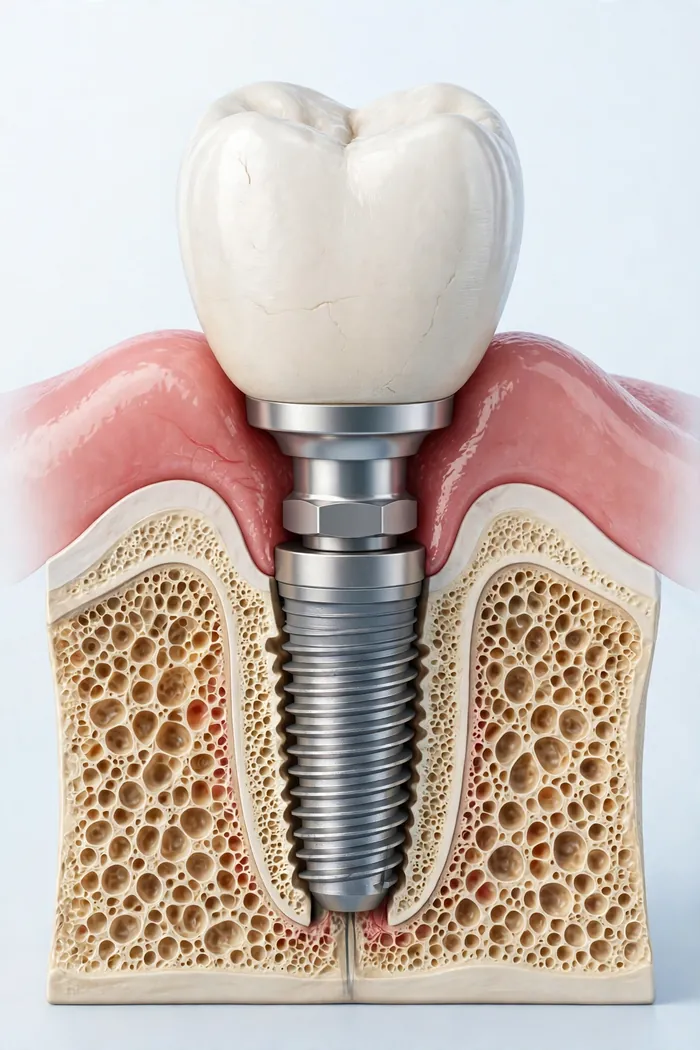
Teeth Implants Near Me: How to Compare Local Providers
Typing “teeth implants near me” into Google gives you a list of local providers in under a second. It does not tell you which one deserves your trust and your money. A dental implant is a months-long treatment with surgery, healing time, and a bill that often runs into the thousands, so the way you compare your local options matters as much as the names on the list.
This guide is a comparison process, not a credentials lecture. You will build a shortlist of local providers, set up a worksheet that puts them side by side, run productive consultations, compare quotes line by line, and make a calm final decision. For help checking a dentist’s training and spotting red flags before you start, read our guide on choosing your implant dentist first, then come back here to run the comparison.
Quick answer: Build a shortlist of three to four implant providers using Google Maps, reviews, and referrals. Create a comparison worksheet with columns for technology, quote, warranty, and reviews. Attend two to three consultations with one question list, then compare quotes line by line. Choose the best fit on price, plan, and trust, not the lowest number alone.
Step 1: Build Your Local Shortlist
Your first job is turning the long “teeth implants near me” results list into five or six serious candidates. Do this research in one sitting. It usually takes about an hour.
Start with Google Maps, not the regular web results. Search the exact phrase teeth implants near me and also try “dental implants” plus your city name. Maps shows ratings, review counts, photos, and hours in one view, which makes the first cut fast. Open the website of any practice that catches your eye and look for a dedicated implant page. A practice that invests in a full implant section takes the procedure seriously. One that buries implants in a bullet list of twenty services probably does not.
Read reviews with a filter in mind: you want mentions of implants specifically, not just cleanings and friendly staff. “My implant process was smooth from scan to crown” is useful. “Nice waiting room” is not. Also note how the practice answers negative reviews. A calm, professional reply suggests accountability. Silence or defensiveness suggests the opposite.
Next, ask your own general dentist for a referral. Dentists see implant results every day when they place crowns on other doctors’ implants, so their recommendations carry real weight. If you know anyone who has had an implant, ask who did it and what the experience was like. One honest patient story beats ten polished website bios.
When your list reaches five or six names, do a five-minute phone screen with each office before booking anything. Ask three quick questions: Do you offer implant consultations, and what do they cost? Is 3D imaging done in-house? Will I leave with a written treatment plan and itemized quote? Offices that answer all three cleanly stay on the list. Offices that dodge or rush you drop off. You want three or four providers left standing for consultations.
If you are still fuzzy on the procedure itself, read our teeth implants guide before you start calling. Knowing the basic steps helps you spot confident answers.
Step 2: Set Up Your Side-by-Side Comparison Worksheet
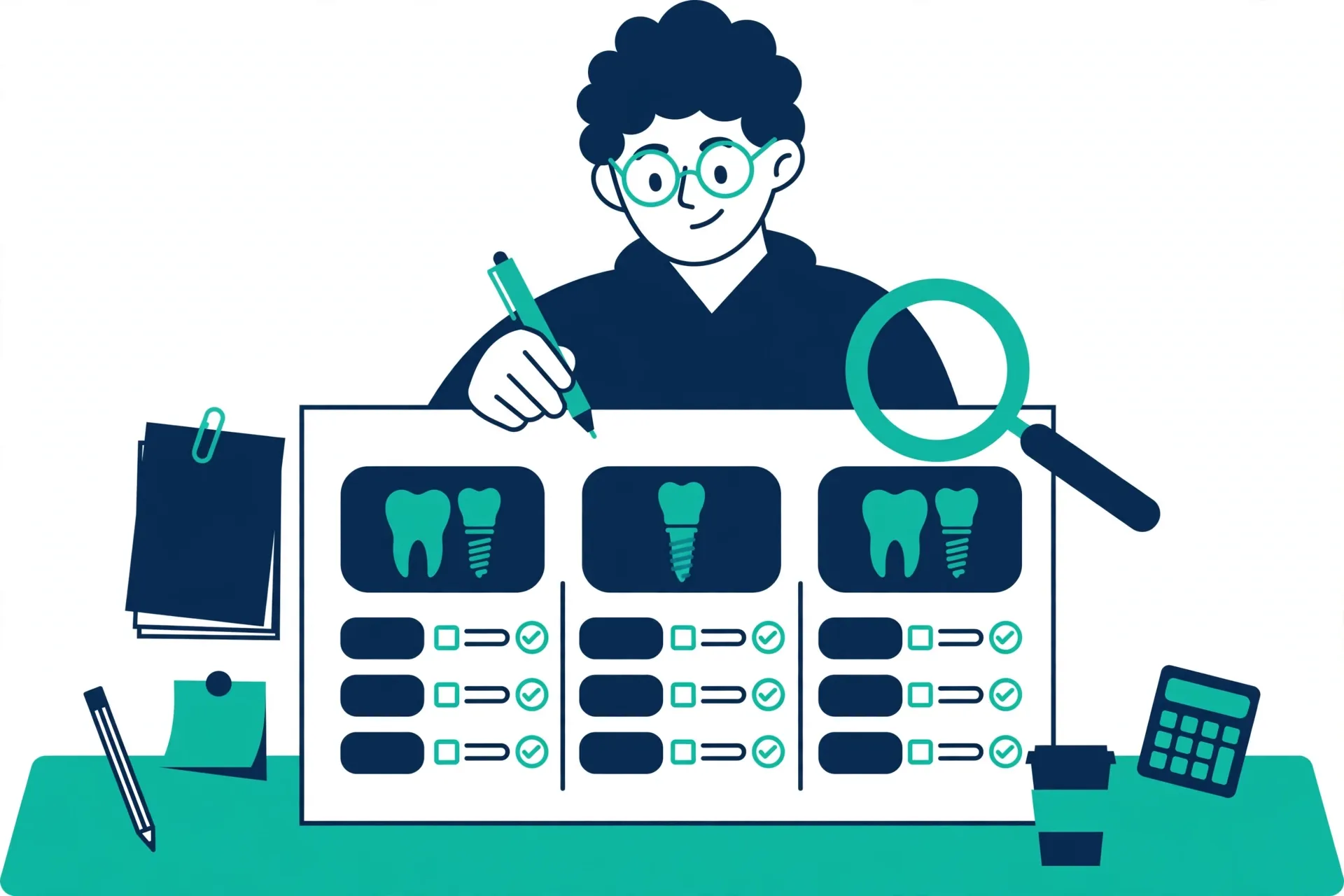
A comparison only works if every provider is measured on the same things. Before your first consultation, build one worksheet with the same columns for everyone. A simple spreadsheet works, and so does a printed sheet with a row per visit.
Use these columns. They cover the five things that separate a good implant experience from a bad one: technology, quote, warranty, reviews, and communication.
| Provider | Technology and imaging | Itemized quote | Warranty terms | Reviews and references | Timeline and visits | Consult cost |
|---|---|---|---|---|---|---|
| A | ||||||
| B | ||||||
| C | ||||||
| D |
Fill in each column right after the visit while the details are fresh. For technology, note whether the office has in-house 3D CBCT imaging and whether they use guided surgical planning. For the quote, record the itemized total, not a single lump number. For warranty, write down exactly what is covered and for how long, in the practice’s own words. For reviews, keep your one-line summary from the research phase. For timeline, note the number of visits and the expected months from first surgery to final crown.
Then score each provider from 1 to 5 in every column. This turns gut feeling into something you can actually compare. Price and the written plan deserve the most weight, but do not ignore communication. You will see this team several times over a few months, and a practice that answers questions patiently now will do the same when you are healing.
Here is what a scored row looks like. Your numbers will differ, but the format stays the same.
| Provider | Technology | Quote value | Warranty | Reviews | Timeline | Communication | Total |
|---|---|---|---|---|---|---|---|
| Example: Provider A | 4 | 3 | 5 | 4 | 4 | 5 | 25 |
Step 3: Consultation Day: What to Do and Ask
Book consultations with your top three or four providers. Many offices offer a free or low-cost implant consultation, so the full round often costs little or nothing. Space the visits a week apart if you can. That gives you time to think between them.
Before you walk in
Bring your ID, your dental insurance card if you have one, a list of medications and health conditions, and any recent dental X-rays you can get from your current dentist. Write your questions down and bring the list. If the terms still sound foreign, our dental implants explained guide covers the basics in plain language.
During the visit
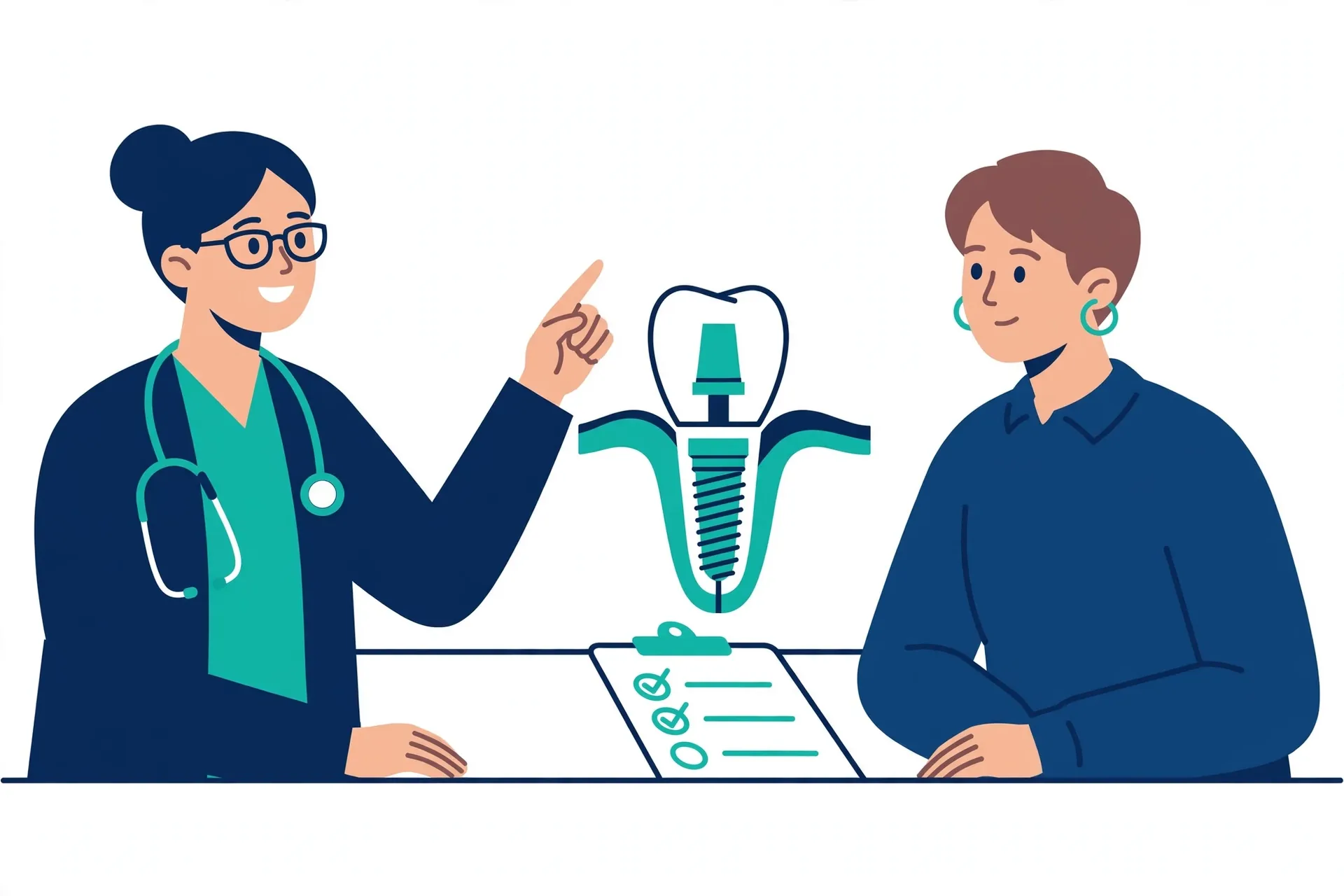
Your goal is to leave with facts you can put in the worksheet, not impressions. Take notes or ask if you can record the plan summary on your phone. A good consultation feels unhurried. The provider examines you, discusses whether you are a candidate, explains the recommended plan step by step, and puts pricing in writing. Watch how questions are handled. Direct answers now predict direct answers later.
Ask the same ten questions at every office. Identical questions produce comparable answers, which is the whole point of the worksheet.
| Ask this | A comparable answer looks like |
|---|---|
| Can I get the full treatment plan in writing today? | Yes, with each stage named and priced |
| What exactly is included in this quote? | Every line item named: scan, surgery, abutment, crown |
| Who performs each step of the treatment? | Named people or roles, including any outside specialist or lab |
| How many visits will this take, and over how many months? | A visit count and a month range, not a shrug |
| Do I need a bone graft, and how does that change the cost and timeline? | A clear yes or no, with the added cost and months stated |
| What brand of implant do you place? | A named manufacturer and a reason for choosing it |
| What is your written warranty, and what voids it? | Years of coverage and the conditions, in writing |
| How is payment scheduled across the stages? | Amounts tied to treatment stages, not one upfront demand |
| What happens if the implant does not integrate with the bone? | A stated revision policy, including who pays |
| Can I take the plan and quote home to review? | Yes, without pressure to decide on the spot |
After the visit
Score the provider in your worksheet within 24 hours, while the conversation is still fresh. Note anything that surprised you, good or bad. If an office promised to email the written plan and it never arrives, write that down too. Follow-through before treatment predicts follow-through after it.
Step 4: Compare Quotes Line by Line
With two or three written quotes in hand, line them up item by item. This is where most people find the real differences. Two quotes can show the same total while covering very different things.
| Line item | Quote A | Quote B | Quote C |
|---|---|---|---|
| Exam and 3D CBCT scan | |||
| Tooth extraction (if needed) | |||
| Bone graft (if needed) | |||
| Implant fixture and surgery | |||
| Abutment | |||
| Crown | |||
| Temporary tooth (if offered) | |||
| Sedation (if used) | |||
| Follow-up visits | |||
| Warranty terms |
Three rules keep this comparison honest. First, only compare quotes that cover the same treatment. If one plan includes a bone graft and another does not, ask both offices to explain the difference before you judge the prices. Second, treat a missing line as a warning, not a discount. A quote that skips the crown or the graft is incomplete, not cheaper. Third, ask how long each quote stays valid. Most practices honor a quote for 30 to 90 days, which gives you room to decide without rushing.
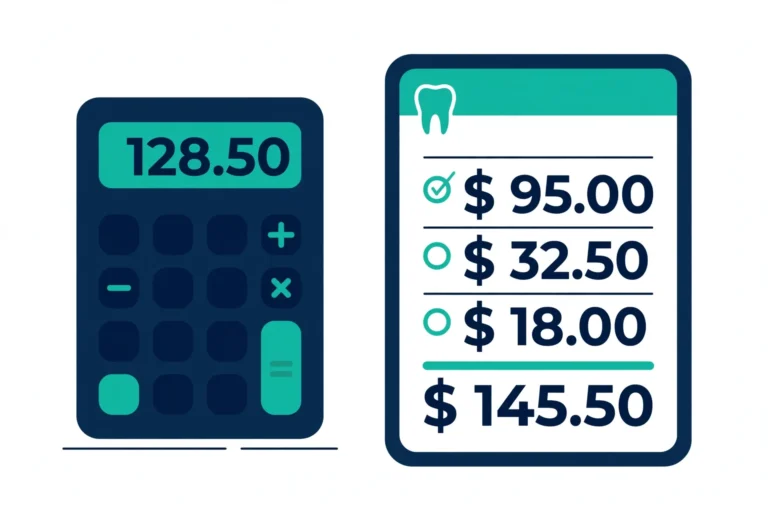
For a baseline on what each part typically costs in the US, see our dental implant prices breakdown. A single implant with crown often lands between $3,000-$6,000 depending on the market, and grafting or sedation adds to that. If one quote sits far outside the local pattern, ask what explains it before you assume it is a bargain or a rip-off.
Also compare payment schedules, not just totals. A practice that ties payments to treatment stages is easier to work with than one that wants most of the money upfront. Ask about financing options at each office and write the terms in your worksheet so the comparison stays complete.
Step 5: Make the Final Decision
Fill in the last scores, add up the totals, and look at the worksheet as a whole. The highest score usually points to the right choice, but read it with judgment. If the winner leads on price but trailed badly on communication, ask yourself whether you want that trade for a months-long treatment.
Use tie-breakers that the numbers miss. Which office explained things most clearly? Which one would you call first if something hurt at 9 p.m.? A small difference in driving distance is worth accepting for a team you trust. Implant treatment usually needs only four to six visits spread over several months, so a slightly longer drive is a minor cost.
Sleep on the decision for at least one night. Implants are elective in almost every case, and no honest practice needs your answer today. If a front desk tells you a discount expires tonight, treat that as information about the practice, not about the offer.
Once you decide, call the winning office to book your first treatment appointment and politely decline the others. A short “thank you, I have decided to go with another provider” is all it takes. Keep your losing quotes for a year. If anything about the treatment changes, they give you a reference point for a second opinion.
Teeth Implants Near Me: FAQ
How many providers should I compare when searching for teeth implants near me?
Start with five or six names, then consult with three or four. Two consultations can leave you guessing when the plans disagree. More than four creates decision fatigue without adding much new information.
Should I just pick the cheapest quote?
No. The lowest quote often leaves out the crown, the graft, or the follow-up visits. Compare itemized totals for identical treatment, then weigh the warranty, the technology, and how clearly the office communicated. The best value is rarely the lowest number.
How long does the whole comparison process take?
Most people finish in two to four weeks: one week for research and phone screens, one to two weeks for consultations, and a few days to compare quotes and decide. Implants are elective in most cases, so there is usually no medical reason to rush the decision.
What if two providers recommend different treatment plans?
Ask each one to explain why their plan fits your case. Different plans often come down to grafting, the implant brand, or whether a tooth can be saved. If the answers still conflict, a third consultation usually breaks the tie.
Can I ask a provider to match a lower quote?
You can ask, politely, and some offices will adjust or offer phased payments. Do not expect a match when the plans differ. A lower quote for a smaller scope is not the same treatment, and a good office will explain that rather than just cutting the price.
The Bottom Line
Comparing local providers for teeth implants near me is a project with a clear end: a worksheet with three or four scored providers, two or three itemized quotes, and one decision you can defend. The process takes a few weeks and a few hours of your attention. The implant itself can last decades.
Start the shortlist this week. Ask the same questions everywhere, write everything down, and let the side-by-side comparison do the deciding. Your future self, chewing comfortably, will be glad you did the homework.
This article is for informational purposes only and is not medical advice. Dental implant treatment involves surgery, and individual results vary. Always consult a qualified dental professional about your specific situation before making treatment decisions.
About Rankex Solutions
Rankex Solutions works on local SEO and Google Business Profile optimization for businesses in the UAE and the US. Its background is in rank-and-rent SEO and freelance search marketing.