How to Choose the Best Dental Implant Dentist Near You
Typing “dental implants near me” into Google gives you dozens of names in seconds. Turning that list into the right dentist takes more work. An implant is a surgical procedure that lives in your jaw for decades, so the person placing it matters more than the price on the flyer.
This guide gives you a practical system for finding and vetting an implant dentist. You will learn which credentials actually matter, what to ask at your consultation, how to compare quotes fairly, and which red flags mean you should keep looking. Work through it once and you can shortlist any implant practice with confidence.
Quick answer: Start with implant-specific training and case volume, not generic reviews. Look for a dentist who places implants weekly, uses 3D CBCT imaging, and gives you a written plan with itemized costs. Ask how many implants they placed last year and what their plan is if one fails. Walk away from pressure tactics, vague pricing, or anyone who skips the bone assessment.
Start With Credentials That Actually Matter
Every dentist on your “dental implants near me” list went to dental school. That alone does not make someone an implant dentist. Implant placement is a surgical skill, and the training behind it varies widely. Some dentists took a weekend course. Others completed year-long fellowships and place hundreds of implants a year.
Credentials worth looking for include a fellowship or diplomate status with the International Congress of Oral Implantologists (ICOI) or the American Academy of Implant Dentistry (AAID). Board certification through the American Board of Oral Implantology is another strong signal. These are not magic badges, but they show the dentist invested serious time in implant-specific education.
Also check whether the dentist is a specialist. Oral surgeons and periodontists train extensively in the surgery involved. Many excellent general dentists place implants too, but a general dentist should be able to point to specific implant training beyond dental school. If their bio page talks only about cosmetic dentistry and says nothing about implant education, that is a gap worth asking about.
Case Volume Beats Fancy Marketing
The single most useful question you can ask is also the simplest: how many implants did you place last year? A dentist who places 100 or more implants a year has seen the complications, the tricky bone cases, and the revisions. A dentist who places 10 a year is still learning on patients like you.
There is no official minimum number, but most implant educators suggest that higher volume correlates with more predictable outcomes. Do not be shy about asking. A confident, experienced provider answers this question directly. A vague answer (“we do quite a few”) is itself an answer.
Ask a follow-up too: how long have you been placing implants? Someone with 15 years of steady implant work brings judgment that no course can teach. Pair that with current technology, which we cover next, and you have a strong combination.
Technology Tells You How Thorough They Are
Modern implant dentistry runs on imaging. A 3D CBCT scan shows your bone in three dimensions: its height, width, density, and exactly where nerves and sinuses sit. A practice that plans implants from a flat 2D X-ray alone is working with incomplete information.
Ask whether the practice has a CBCT scanner in-house and whether they use guided surgery. Guided surgery uses a 3D-printed guide based on your scan to place the implant at the exact planned angle and depth. It is not required for every case, but a practice that offers it is planning at a higher level of precision.
Also ask about the implant systems they use. Reputable manufacturers with long track records and published research include Straumann, Nobel Biocare, Dentsply Sirona, and Zimmer Biomet. There is nothing wrong with other brands, but you want to hear a reasoned answer, not a shrug. Parts availability decades from now matters, and major brands are more likely to still be around.
What a Good Consultation Looks Like
The consultation is your best window into how the practice works. A good one feels thorough and unhurried. A bad one feels like a sales pitch. Here is what the good version includes:
- A full exam plus a 3D CBCT scan of the implant site, not just a glance at an old X-ray.
- An honest discussion of whether you are a candidate, including bone quality, gum health, and habits like smoking that affect healing.
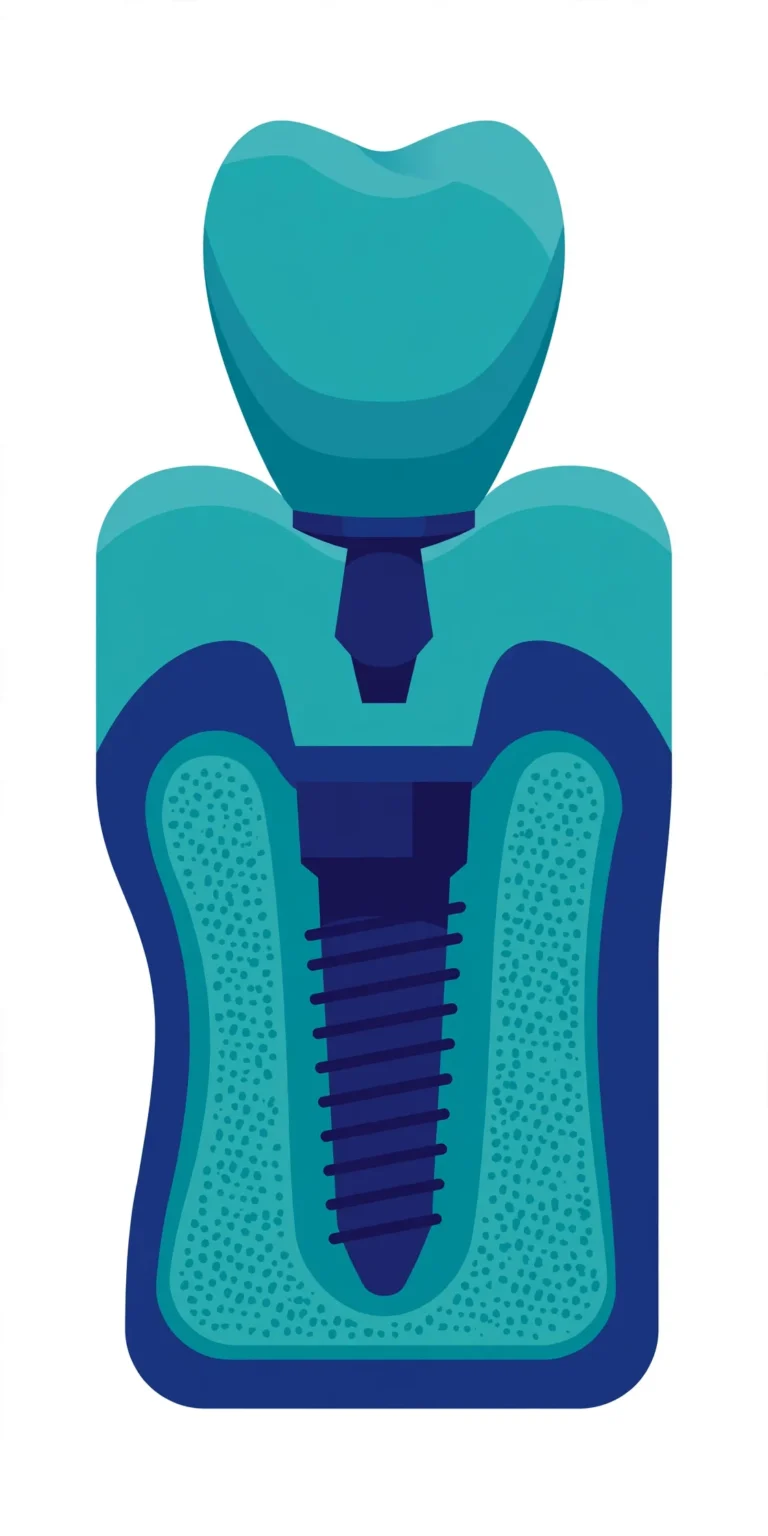
- A written treatment plan that lists each step: extraction if needed, bone grafting if needed, implant placement, abutment, and crown.
- Itemized pricing so you can see what each part costs, not one lump number.
- Time to ask questions, with direct answers instead of deflections.
- A clear explanation of what happens if the implant fails to integrate, including who pays for the fix.
If you want background on the procedure itself before you go in, read our dental implants explained guide so the terminology feels familiar. Walking in informed changes the whole conversation.
Questions to Ask Before You Commit
Bring this list to every consultation. The answers let you compare practices on substance instead of vibes.
| Question | Why it matters |
|---|---|
| How many implants did you place last year? | Volume signals real experience, not occasional practice. |
| What is your training in implant dentistry? | Reveals whether they have formal implant education or a weekend course. |
| Will you do a 3D CBCT scan before planning? | Shows whether planning is precise or guesswork. |
| What implant brand do you use, and why? | Tests whether choices are deliberate and long-term parts will exist. |
| Do I need bone grafting, and how does that change the timeline? | Grafting adds months; you deserve to know upfront. |
| What is the total itemized cost? | Prevents surprise add-ons later in treatment. |
| What happens if the implant fails? | Clarifies warranty terms and who covers revision costs. |
| Who does each step: you, a specialist, or a lab? | Some practices outsource surgery or the crown; know who is responsible. |
Red Flags That Should Make You Walk Away
Trust your instincts, but verify them against this list. Any one of these is a reason to get a second opinion. Two or more means keep searching your “dental implants near me” results.
- Pressure to decide today. Discounts that expire at midnight are a sales tactic, not a treatment plan. Implants are elective; a good practice lets you think.
- No 3D imaging. Planning a surgical implant from a 2D X-ray in 2026 is below the standard of care in most cases.
- Vague or lump-sum pricing. If they cannot itemize the implant, abutment, crown, graft, and scans, you cannot compare quotes fairly.
- Guaranteed results. No honest dentist guarantees a 100 percent success rate. Biology does not work that way.
- Skipping the bone discussion. If they never mention bone density or grafting, they may not be evaluating whether your jaw can hold an implant.
- Rock-bottom pricing far below every other quote. A single implant quoted at a fraction of the local average usually means corners cut: cheaper parts, skipped steps, or inexperienced hands.
- Reluctance to discuss failure. Every experienced implant dentist has had one fail. How they handle it tells you everything about their integrity.
How to Compare Quotes Without Getting Burned
Implant quotes vary widely, and the cheapest option is rarely the best value. A fair comparison starts with making sure every quote covers the same things. Our dental implant prices breakdown shows what each part of treatment typically costs in the US, which gives you a baseline before you collect estimates.
Get at least two or three written quotes. Then line them up side by side:
| Line item | Quote A | Quote B | Quote C |
|---|---|---|---|
| Exam and 3D CBCT scan | |||
| Extraction (if needed) | |||
| Bone graft (if needed) | |||
| Implant fixture and surgery | |||
| Abutment | |||
| Crown | |||
| Follow-up visits | |||
| Warranty terms |
Ask each practice the same questions so the comparison stays honest. If one quote is dramatically lower, find out what is missing. Sometimes it is the crown. Sometimes it is the graft you actually need. A complete quote at a fair price beats a partial quote at a bargain price every time.
Also ask about payment structure. Many practices offer phased payments tied to treatment stages, third-party financing, or in-house plans. For a broader look at what affects the final number, see our dental implant cost breakdown for single tooth, bridge, and full mouth scenarios.
Reading Reviews the Smart Way
Reviews help, but only if you read them critically. A perfect 5.0 across hundreds of reviews can be as suspicious as a 3.2. Look for reviews that mention implants specifically, not just cleanings. “Dr. Lee placed my implant in March and the whole process was smooth” tells you far more than “great office, friendly staff.”
Pay special attention to how the practice responds to negative reviews. A thoughtful, professional reply to a complaint shows accountability. Silence, or worse, an argumentative reply, shows you how they handle problems. You want the practice that owns its mistakes.
Check multiple sources: Google, Healthgrades, and Yelp at minimum. Patterns across platforms matter more than any single review. If three different reviewers mention rushed consultations or surprise billing, believe the pattern.
Before-and-after proof
Ask to see before-and-after photos of actual implant cases, especially cases similar to yours. A practice proud of its work shows it. Also ask whether you can speak with a past implant patient as a reference. Not every practice offers this, but the ones that do are showing real confidence.
Narrowing Your “Dental Implants Near Me” Shortlist
With research done, turn your long list into a short one. Search “dental implants near me” and pull the top 8 to 10 results. Then filter:
- Round 1: credentials scan. Drop anyone whose site says nothing about implant training or case experience. This usually cuts the list in half.
- Round 2: review filter. Keep practices with strong implant-specific reviews and professional responses to criticism.
- Round 3: phone screen. Call the survivors. Ask about CBCT imaging, implant volume, and whether consultations include a written plan. The front desk’s answers reveal how the practice thinks.
- Round 4: consult the top 2 or 3. Many practices offer free or low-cost implant consultations. Use them. Bring your question list.
Distance matters less than you think. You will visit the office maybe 4 to 6 times over several months. Driving an extra 20 minutes for a clearly better implant dentist is a trade worth making. Do not let a 5-minute drive override a 5-year difference in experience.
If the different implant options confuse you, our teeth implants guide walks through the types, timelines, and what each appointment involves, so you know what you are signing up for.
Dental Implants Near Me: FAQ
How do I know if a dentist is qualified to place implants?
Look for implant-specific training such as an AAID or ICOI fellowship, plus real case volume. Ask how many implants they placed last year and what imaging they use for planning. Direct answers signal competence; vague ones signal the opposite.
Should I choose an oral surgeon or a general dentist for implants?
Both can do excellent work. Oral surgeons and periodontists have deeper surgical training, which helps in complex cases like full mouth reconstruction or severe bone loss. For a straightforward single implant, an experienced general dentist with strong implant training is often a fine choice.
How much should a dental implant cost near me?
A single implant with crown typically ranges from $3,000 to $6,000 in most US markets, depending on the city, the dentist’s experience, and whether you need grafting. Get itemized quotes from at least two practices before deciding. Prices far below this range deserve extra scrutiny.
Does dental insurance cover implants?
Sometimes, partially. Many plans cover the crown but not the surgical implant itself, and annual maximums often cap the benefit. Read our does insurance cover implants guide to learn how to check your specific plan before your consultation.
What should I avoid when choosing an implant dentist?
Avoid pressure tactics, vague lump-sum pricing, no 3D imaging, guaranteed success rates, and quotes far below the local average. Any of these suggests the practice prioritizes sales over outcomes.
Is it worth traveling farther for a better implant dentist?
Often yes. Implant treatment spans a few months with only a handful of visits, so an extra 20 to 30 minutes of driving is a small price for meaningfully better experience and planning. Choose skill over convenience.
The Bottom Line
Finding the right implant dentist is a research project, not a coin flip. Credentials, case volume, 3D planning, honest pricing, and a thorough consultation separate the practices worth your trust from the ones worth skipping. Use the checklists above, compare at least two written quotes, and never let urgency override judgment.
Your future self, chewing comfortably on an implant that lasts decades, will thank you for the few hours you spent choosing well.
This article is for informational purposes only and is not medical advice. Dental implant treatment involves surgery and individual results vary. Always consult a qualified dental professional about your specific situation before making treatment decisions.
About Rankex Solutions
Rankex Solutions works on local SEO and Google Business Profile optimization for businesses in the UAE and the US. Its background is in rank-and-rent SEO and freelance search marketing.