
7 Dental Insurance Plans That Cover Implants
Quick answer: The best dental insurance that covers implants usually falls into one of seven plan types: PPO plans with major-service implant benefits, no-waiting-period plans, high annual maximum plans, plans with implant riders, employer group plans, discount plans, and HSA or FSA pairing. Compare waiting periods, annual maximums, and whether the crown and abutment are included before you enroll.

Most dental plans list implants as a major service, yet many shoppers discover the fine print only after the dentist presents a $4,000-$6,000 estimate. Finding dental insurance that covers implants takes more than picking the first plan with the word implant in the brochure. You need to read the benefit schedule like a buyer, not a patient.
This guide walks you through the seven plan types worth comparing when you shop. It covers what “covers implants” actually means in plan language, how to compare waiting periods and annual maximums side by side, and the exact questions to ask before you enroll. It does not repeat the basics of when insurers pay for implants, which our companion guide on does dental insurance cover implants already explains in detail.
What “Covers Implants” Means in Plan Language
Insurance language is precise, and shoppers get tripped up by words that sound alike. “Implant coverage” can mean three different things depending on where it appears in your plan documents.
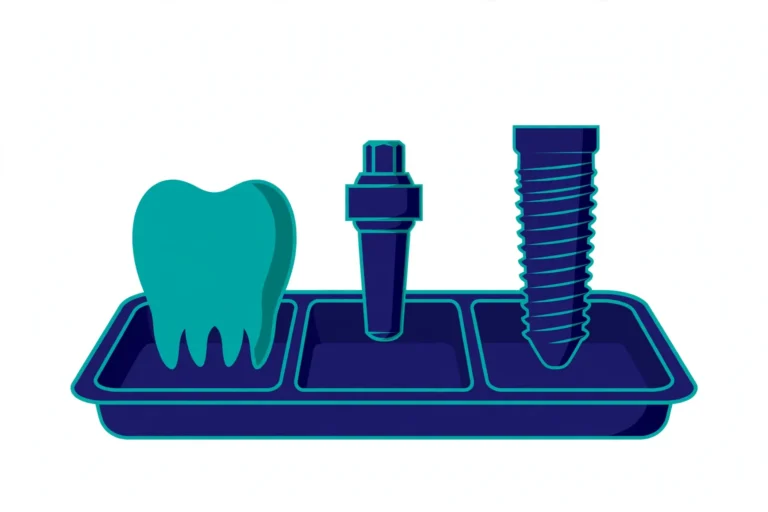
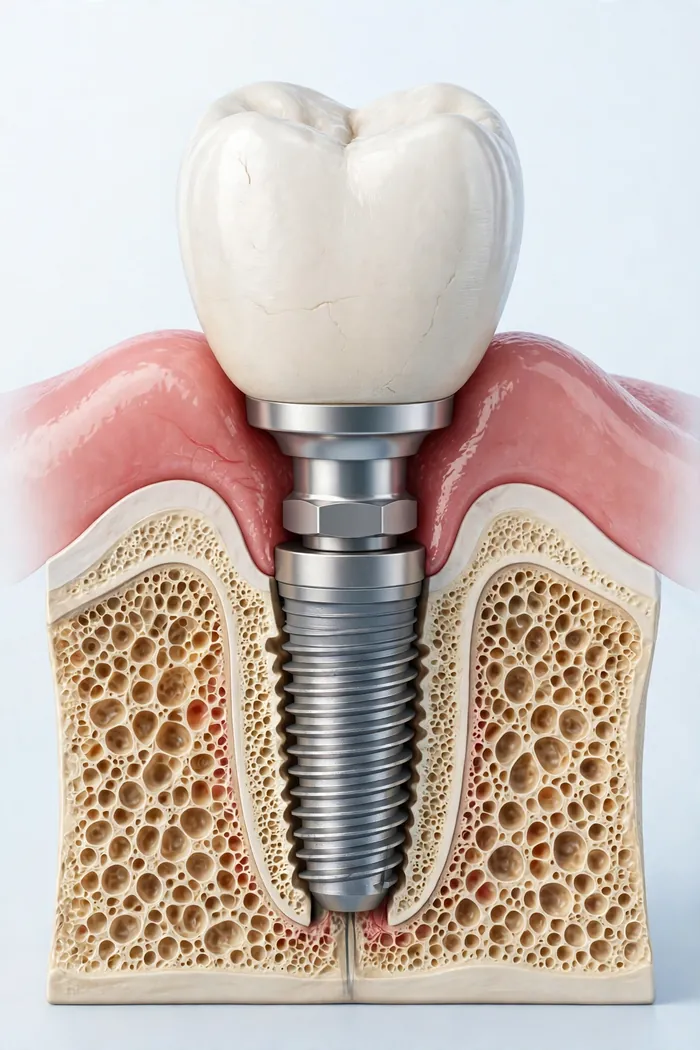
First, the plan may cover the full implant: the surgical post, the abutment, and the crown. This is the gold standard and the least common. Second, it may cover the crown only, leaving you to pay for the surgical placement out of pocket. Third, it may offer an “alternate benefit,” which means the plan pays what a bridge would have cost and you pay the difference for the implant.
When you shop, look for the procedure codes. Implant placement typically appears under codes in the D6010-D6199 range, while the crown appears under D6058-D6067. A plan that truly includes implants will list these codes in its benefit schedule with a coverage percentage. If you cannot find them, the plan probably does not cover the surgery itself. For a full breakdown of what these treatments cost without coverage, see our guide to dental implant costs.
Coinsurance, Annual Maximums, and Waiting Periods
Three numbers control how much any plan will actually pay toward your implant. Coinsurance is your share after the plan pays its part. A plan that covers implants at 50% coinsurance still leaves you with half the bill. Annual maximums cap the total the plan pays per year, and most fall between $1,000 and $2,500. Waiting periods delay when you can use major-service benefits, often 6-12 months for implants.
A plan that covers implants at 50% with a $1,500 annual maximum and a 12-month waiting period pays very differently from one with the same coinsurance, a $3,000 maximum, and no waiting period. These three numbers are the core of any honest comparison.
1. PPO Plans With Major-Service Implant Benefits
A preferred provider organization (PPO) plan is the most common way Americans get dental coverage, and it is where most shoppers should start. These plans sort treatments into preventive, basic, and major tiers. Implants almost always sit in the major tier, covered at 50% after the deductible.
What makes a PPO worth your money is its in-network pricing. Dentists in the network agree to contracted fees that run 20-40% below their usual charges. Even before insurance pays a dollar, the contracted fee lowers the bill. Then the plan pays its share of the smaller number. Out of network, you pay the full fee and the plan still pays only its percentage, so staying in network matters.
When comparing PPOs, check three things. Confirm implant codes appear in the major tier. Compare the annual maximum, since $1,000-$2,500 is the typical range and implants can use it up in one treatment. And confirm the deductible for major services, which usually runs $50-$100 per person per year.
2. No-Waiting-Period Plans
Standard plans make you wait 6-12 months before major services kick in. If your tooth is already gone or failing, that wait is a real problem. No-waiting-period plans remove that delay so you can start the implant process soon after enrollment.
These plans trade the wait for something else, usually a higher monthly premium, a lower annual maximum, or both. Some also use graded benefits, where the plan pays a small percentage in year one and a larger percentage in year two. Read the benefit year rules carefully. A plan with no waiting period but only 25% coverage in the first year may cost more overall than a standard plan with a short wait.
No-waiting-period plans suit people who need treatment soon and can pay higher premiums. They suit people poorly if the plan also caps the annual maximum at $1,000, because a single implant can swallow that limit and leave the rest of the work to you.
3. High Annual Maximum Plans
The annual maximum is the single most overlooked number in dental shopping. An implant, abutment, and crown together can cost $3,500-$6,000 for one tooth. A plan with a $1,500 maximum pays at most $1,500 per benefit year, no matter what the coinsurance says.
High annual maximum plans raise that ceiling to $2,500, $3,000, or occasionally $5,000. This matters most for multi-implant cases, where the total bill can reach $10,000-$30,000. With a higher ceiling, more of the second and third implant falls inside the plan year.
One smart tactic is timing. If your plan year resets in January and you can stage treatment across December and January, you can draw on two annual maximums for one treatment plan. Ask your dentist whether the implant surgery and the crown placement can fall in different benefit years. Not every case allows this, since healing time between stages runs 3-6 months, but when it works it effectively doubles your coverage.
4. Plans With Implant Riders
Some base plans exclude implants entirely but let you buy an implant rider, which is an add-on benefit that covers implant procedures for an extra monthly charge. Think of it as a bolt-on module for your dental policy.
Riders appeal to shoppers who like their current plan for everything else and only want implant protection added. The math is simple. Compare the rider’s annual cost against what the rider would pay toward your implant. If the rider costs $20 extra per month, that is $240 per year. If it raises implant coverage from 0% to 50% on a $5,000 case, it pays for itself many times over. But if it only pays a flat $500 toward implants, you need to weigh whether $240 a year buys enough value.
Watch for rider-specific waiting periods, which can differ from the base plan. Also confirm whether the rider covers the full implant or only the crown. A rider that pays only toward the crown is better than nothing, but it is not the full coverage the name might suggest.
5. Employer Group Plans
If your employer offers dental coverage, start there before shopping on your own. Group plans are negotiated for hundreds or thousands of employees, which gives them two advantages individual shoppers rarely get: lower premiums per dollar of coverage and annual maximums that run higher than typical individual plans.
Many group plans include implants in the major tier at 50% with annual maximums of $2,000-$3,000. Some large employers offer buy-up options, where you pay a slightly higher payroll deduction for a richer plan with a higher maximum or a shorter waiting period. During open enrollment, compare the standard and buy-up options side by side using the three numbers: coinsurance, annual maximum, and waiting period.
One caution: group plans often reset waiting periods when you are a new hire. If you join a company in March, check whether major-service benefits start immediately or after a 90-day eligibility period. Also confirm whether the plan covers implants for teeth missing before you enrolled, since some plans exclude pre-existing missing teeth.
6. Dental Discount Plans as an Alternative
Discount plans are not insurance. You pay an annual membership fee, usually $100-$200, and get access to dentists who charge members reduced fees. There are no claims, no annual maximums, and no waiting periods.
For implants, discounts of 15-25% off the dentist’s usual fee are typical. On a $5,000 case, that saves $750-$1,250 for a membership that costs a fraction of that. The tradeoff is obvious: a discount is not a payment. You still pay the full discounted bill yourself.
Discount plans work best in two situations. First, when no insurance plan in your area covers implants well and you would be paying mostly out of pocket anyway. Second, as a bridge while you wait out an insurance waiting period, since you can use the discount immediately and let insurance take over later. Some shoppers combine a discount plan with a high-deductible insurance plan to cover both routine care and the implant discount.
7. Pairing Any Plan With an HSA or FSA
Health savings accounts (HSAs) and flexible spending accounts (FSAs) are tax-advantaged accounts that let you pay medical and dental costs with pre-tax dollars. Dental implants are an eligible expense under both. This is not a plan type on its own, but it changes the math on every option above.
Paying for implants with pre-tax dollars effectively discounts your out-of-pocket cost by your tax rate. If you are in the 22% bracket, a $5,000 implant bill paid through an HSA costs you about $3,900 in real terms. That is a bigger saving than many insurance plans deliver on their own.
HSAs pair with high-deductible health plans and roll over year to year, which makes them ideal for multi-year implant treatment. You can contribute this year, let the balance grow, and pay for the crown stage next year. FSAs usually require you to spend the funds within the plan year, so time your contributions to match your treatment schedule. If your employer offers an FSA, enroll during open enrollment and fund it for the expected implant cost.
Side-by-Side Plan Comparison
Use this table to compare the seven options at a glance. Your priorities decide which column matters most: speed, total payout, or monthly cost.
| Plan type | Best for | Typical implant coverage | Waiting period | Watch out for |
|---|---|---|---|---|
| PPO with implant benefit | Most shoppers | 50% of contracted fee | 6-12 months | Low annual maximum |
| No-waiting-period plan | Urgent treatment needs | 25-50%, may grade up yearly | None | Higher premiums, low maximums |
| High annual maximum plan | Multiple implants | 50% up to $3,000-$5,000 | 6-12 months | Higher monthly cost |
| Plan with implant rider | Adding to a plan you like | Varies, 50% or flat amount | Rider may differ | Rider may cover crown only |
| Employer group plan | Employees with benefits | 50%, $2,000-$3,000 maximum | Eligibility period | Missing-tooth exclusions |
| Dental discount plan | No good insurance options | 15-25% fee discount | None | You pay the full bill |
| HSA or FSA pairing | Anyone with access | Tax savings of 20-30% | None | FSA funds expire yearly |
For more on how insurers decide what to pay, our guide to dental implant insurance basics covers the claims side of the process.
Questions to Ask Before You Enroll
Plan brochures are written to sell. These questions, asked directly to the insurer or benefits department, reveal what the brochure hides.
- Are implant placement codes covered, or only the crown? Get the specific codes in writing. Coverage of the crown alone is a common surprise.
- What is the annual maximum, and does it apply per person? Family maximums that are shared across members drain faster than per-person limits.
- How long is the waiting period for major services? Ask separately about implants, since some plans set a longer wait for them than for other major work.
- Is there a missing-tooth clause? Some plans refuse to cover implants for teeth that were missing before the policy started.
- Does the plan pay an alternate benefit? If the plan would only pay the cost of a bridge toward your implant, know the dollar difference up front.
- Are the abutment and bone graft covered? These add-ons can cost $500-$2,000 and are often billed separately from the implant itself.
- What counts as in network for the oral surgeon? The dentist who places the implant may not be in the same network as your general dentist.
- Can I stage treatment across two benefit years? This doubles your effective maximum if your dentist can schedule the surgery and crown in different plan years.
Write down the answers with the name of the person who gave them and the date. If a claim is later denied, that record is your best tool for an appeal. Our overview of implant dental coverage rules explains what to do when a claim does not go your way.
Frequently Asked Questions
Which dental insurance is best for implants?
There is no single best plan. A PPO with implants in the major tier, a $2,500 or higher annual maximum, and a short waiting period suits most people. Match the plan to your timeline and the number of implants you need.
Can I get dental insurance that covers implants with no waiting period?
Yes. Some plans waive waiting periods entirely, and discount plans have none at all. Expect higher premiums or graded first-year benefits in exchange for immediate access.
How much will insurance actually pay toward an implant?
A typical plan pays 50% of the contracted fee up to the annual maximum. On a $5,000 implant with a $1,500 maximum, the plan pays $1,500 and you pay the rest. Higher maximums change this math in your favor.
Do discount plans really help with implant costs?
They lower the bill by 15-25% with no waiting period and no annual maximum. They do not pay part of the bill the way insurance does. They work best when insurance options in your area are weak.
Should I use an HSA or FSA for implants?
If you have access to either, yes. Implants are an eligible expense, and pre-tax payment cuts your real cost by your tax rate. HSAs roll over, which suits multi-year treatment. FSA funds usually expire each year.
What if my employer plan excludes implants?
Ask about a buy-up tier during open enrollment, check for an implant rider you can add, or pair a basic plan with an HSA. A discount plan can also bridge the gap while you explore individual options.
The Bottom Line
Shopping for dental insurance that covers implants comes down to three numbers and one question. The numbers are coinsurance, annual maximum, and waiting period. The question is whether the plan covers the implant surgery itself or only the crown. Get those four facts in writing before you enroll, and you will avoid the most expensive surprises.
Start with your employer plan if you have one, compare two or three individual PPOs against it, and run the total cost including premiums before you decide. The cheapest premium is rarely the cheapest plan once a $5,000 implant enters the picture.
This article is for informational purposes only and is not medical advice. Dental treatment decisions should be made with a licensed dentist, and insurance details vary by plan and state. Confirm all coverage terms directly with the insurer before enrolling or scheduling treatment.
About Rankex Solutions
Rankex Solutions works on local SEO and Google Business Profile optimization for businesses in the UAE and the US. Its background is in rank-and-rent SEO and freelance search marketing.