
How to Get Insurance for Dental Implants: A Practical Guide
Quick answer: To get insurance for dental implants, compare PPO, indemnity, HMO, and discount plans for implant coverage, waiting periods, and annual maximums. Check whether the plan excludes implants or requires a rider. Time your enrollment so waiting periods end before treatment. Employer plans usually pay more than individual plans, and a discount plan can beat weak insurance for a single implant.

A single implant can cost $3,000 to $6,000 or more, so the right coverage matters. The problem is that finding insurance for dental implants is not like buying a standard policy. Many plans exclude implants outright. Others cover them only after a long wait. If you know how to shop, you can avoid the traps and pick a plan that actually lowers your bill.
This guide walks you through plan types, the fine print that matters, timing strategy, and the exact questions to ask before you enroll. It is written for someone who does not yet have good coverage and wants to go get it. If you already have a plan and want to know whether it pays, start with how implant coverage works.
Start With Your Timeline
Before you compare plans, ask yourself when you need the implant. Your answer changes everything. Dental plans come with waiting periods, and those periods decide whether coverage will be there when you need it.
If your treatment is planned for six months from now, you have room to pick a plan with a 6-month waiting period and wait it out. If you need the implant placed in six weeks, most traditional plans will not help in time. In that case, a discount plan or a membership plan through your dentist may be the better move.
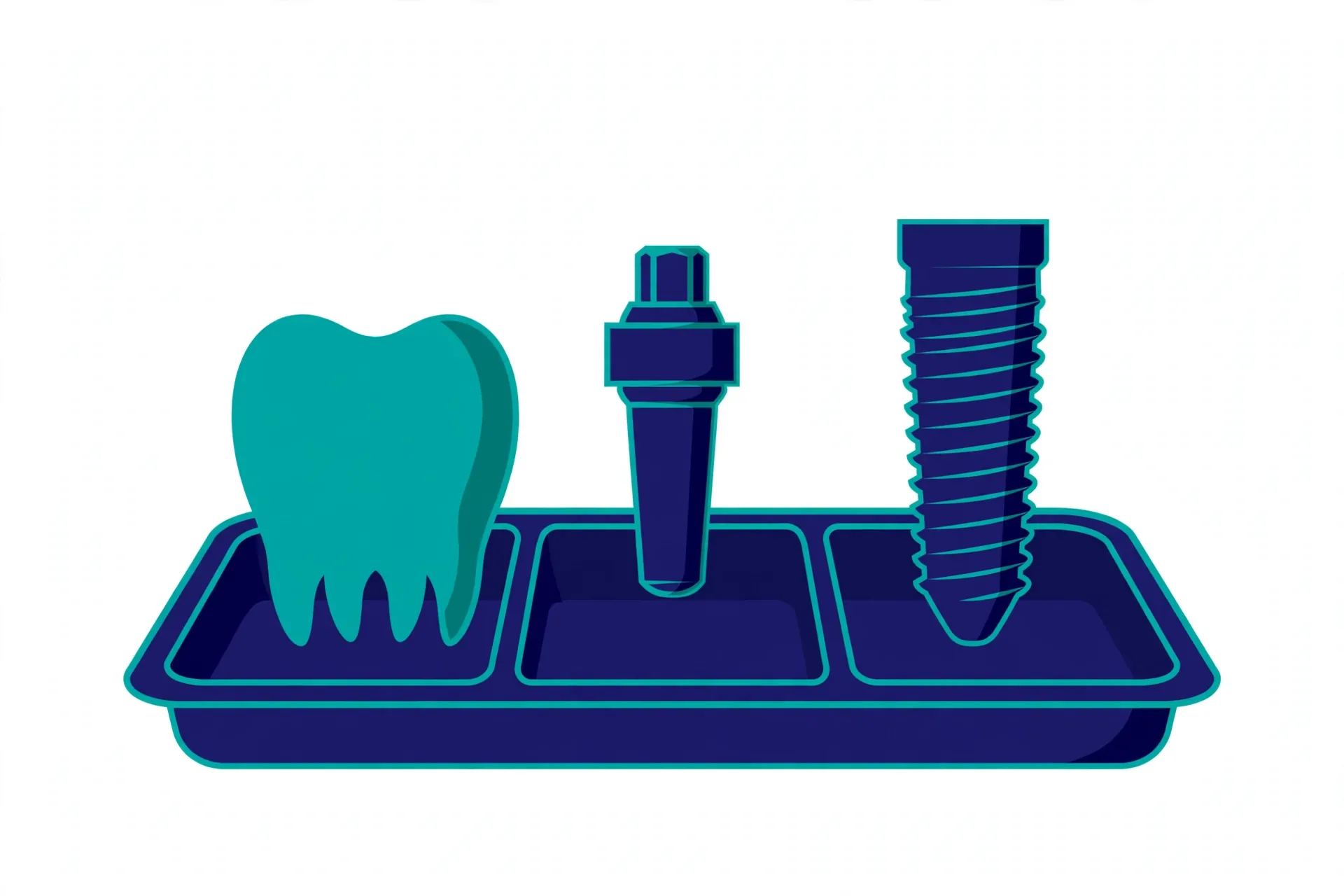
Implant treatment also happens in stages. The post goes in first, then healing takes 3 to 6 months, then the abutment and crown are placed. This staged timeline can work in your favor. Some patients start with a plan that covers the surgical phase, then the crown falls into the next benefit year with a fresh annual maximum. Ask your dentist for a written treatment plan with dates and codes. Then match each stage to the plan you are shopping.
The Four Ways to Get Dental Coverage for Implants
You have four main routes to coverage. They are not equal for implant buyers. Here is how each one works in plain terms.
PPO dental plans
A PPO (preferred provider organization) plan gives you a network of dentists who agree to lower fees. You can also go out of network, but you pay more. For implants, PPOs are the most common option on the market.
Many PPO plans exclude implants from the base policy and cover them only through an implant rider, which is an add-on you pay extra for. Others cover implants at 50 percent after a waiting period of 6 to 12 months. Annual maximums typically range from $1,000 to $2,000. That maximum can cover one stage of treatment, so timing matters.
Indemnity plans
An indemnity plan, sometimes called fee-for-service, pays a set amount for each procedure. You can see any dentist you want, and the plan reimburses you based on its fee schedule. There is no network to worry about.
For implants, indemnity plans can be useful if you want a specific implant dentist who is not in any network. The downside is that the plan’s set fee may be well below your dentist’s actual charge. You pay the difference. These plans also carry waiting periods and annual maximums similar to PPOs, so read the schedule of benefits carefully.
HMO dental plans
An HMO (health maintenance organization) plan assigns you a primary dentist and covers care at fixed copays. Premiums are usually the lowest of the three insurance types. That low price is tempting.
The catch is that many HMO dental plans exclude implants entirely. Those that cover them limit you to dentists in the network, and the network may not include an implant specialist you want. If your chosen plan does not list implants in its copay schedule, assume they are not covered. For most implant buyers, HMOs are the weakest option.
Dental discount plans
A discount plan is not insurance. You pay a yearly fee, usually $100 to $200, and get reduced rates at participating dentists. There is no paperwork, no claims, and no annual maximum.
For implants, discount plans are worth a hard look. Some plans cut the fee for implants and crowns by 15 to 40 percent, depending on the plan and the area. There are no waiting periods, so you can join today and book treatment this week. When a discount plan beats insurance is covered in detail below.
Which option fits you?
| Feature | PPO | Indemnity | HMO | Discount plan |
|---|---|---|---|---|
| Implant coverage | Often, usually with rider | Often, per fee schedule | Rarely | Discounted fees, not coverage |
| Waiting periods | 6-12 months common | 6-12 months common | Varies | None |
| Annual maximum | $1,000-$2,000 typical | $1,000-$2,000 typical | None, fixed copays | None |
| Dentist choice | Network or out of network | Any dentist | Network only | Participating dentists only |
| Best for | Planned treatment with time | Patients with a preferred dentist | Low premium, simple needs | Fast treatment, single implant |
What to Look for in Plan Documents Before You Enroll
Plan brochures are written to sell. The real rules live in the plan document, sometimes called the summary of plan description or evidence of coverage. Ask for it before you enroll. Here is what to check, line by line.
Does the plan name implants at all?
Search the document for the word “implant.” If implants are not mentioned, they are probably not covered. If the document says “implant services excluded,” that is your answer. Do not rely on a sales agent’s word. Get the exclusion or inclusion in writing.
Is there an implant rider?
Some plans cover implants only if you buy an implant rider, an extra add-on with its own premium. Ask what the rider costs per month, what it covers, and whether it has its own waiting period. Do the math. A rider that costs $30 a month and pays 50 percent up to a $1,500 maximum can still leave you paying most of the bill.
What is the waiting period?
Most dental plans impose waiting periods on major services like implants. Six months is common. Twelve months is not rare. Some plans waive the waiting period if you had continuous coverage before. If your treatment cannot wait, a plan with a 12-month wait is useless to you no matter how good its benefits look.
What is the annual maximum?
The annual maximum is the most the plan will pay per year. Typical dental plans top out between $1,000 and $2,000. With implant treatment cost running $3,000 to $6,000 for one tooth, the maximum may cover only one phase. Plans with $3,000 to $5,000 maximums exist, but premiums are higher. Compare the extra premium against the extra benefit.
Is there a missing-tooth clause?
A missing-tooth clause says the plan will not cover treatment for a tooth that was lost before your coverage started. This clause can block implant claims entirely. If your tooth has been missing for a while, check for this wording. Some plans drop the clause after you have been enrolled for a set period.
How does the plan split coverage across stages?
Implants are billed in stages: surgery, abutment, and crown. Some plans cover the crown at a higher percentage than the surgical placement. Others cover the post but not the crown. Ask how each stage is classified and paid. A plan that pays 50 percent on the crown but nothing on the surgery is worth less than it looks.
Employer Plans vs Marketplace Plans vs Individual Plans
Where you buy the plan matters as much as which plan you buy. The three main sources have real differences for implant shoppers.
| Factor | Employer plan | Marketplace plan | Individual plan |
|---|---|---|---|
| Premium cost | Employer pays part | Subsidies may apply | You pay full price |
| Implant benefits | Often stronger | Varies widely | Often weaker, longer waits |
| Waiting periods | Sometimes waived or short | Standard waits apply | 6-12 months common |
| Enrollment window | Open enrollment or hire | Open enrollment or life event | Year-round, but waits start at sign-up |
Employer plans
If your job offers dental insurance, start there. Employer group plans tend to have better benefits and lower premiums than anything you can buy alone. Some waive waiting periods for new hires. Check whether your employer offers more than one dental option. The premium plan may include the implant rider the basic plan lacks.
One warning: do not assume the plan covers implants just because it is a good plan. Plenty of solid employer plans still exclude implants. Review the documents the same way you would for any plan.
Marketplace plans
The health insurance marketplace sells dental plans alongside medical plans. Standalone dental plans are available, and you can shop during open enrollment or after a qualifying life event. Compare the same details: implant inclusion, waiting periods, and annual maximums. Some marketplace dental plans are thin on major services, so do not skip the fine print.
Individual plans bought directly
You can buy a dental plan directly from an insurer at any time of year. The trade-off is that individual plans often have the longest waiting periods and the thinnest implant benefits. They can still work if you buy early enough that the wait ends before your surgery date. Run the numbers before you commit.
Enrollment Timing Strategy
Timing is half the battle with implant insurance. Here is how to plan it.
First, get your treatment timeline in writing from your dentist. You need the expected date for surgery and the expected date for the crown. Then work backward. If the plan has a 6-month waiting period and your surgery is in month 8, you are covered. If surgery is in month 3, you are not.
Second, know the enrollment windows. Employer and marketplace plans usually require you to enroll during open enrollment or after a qualifying life event such as a job change or marriage. Individual plans and discount plans can be joined any time. If you miss open enrollment, a discount plan can bridge the gap until the next window.
Third, think in benefit years. Most plans reset the annual maximum every January or on your enrollment anniversary. Because implants happen in stages, smart scheduling can stretch one maximum across two phases or use two benefit years for two stages. Your dentist’s office deals with this all the time. Ask them to help you schedule stages around your benefit year.
Fourth, do not start treatment before coverage is active if you want the plan to pay. Treatment that begins during a waiting period is usually not covered, even if the final crown is placed after the wait ends. The start date of treatment is what counts.
When a Discount Plan Beats Real Insurance
A discount plan is not insurance, but for some implant patients it saves more money. Run this comparison before you dismiss it.
Take a typical case. You need one implant. Insurance costs $50 a month, has a 12-month waiting period, and pays 50 percent up to a $1,500 maximum. Your first year costs $600 in premiums, and if treatment falls inside the waiting period, the plan pays zero. A discount plan costs $150 for the year, starts working immediately, and cuts your $4,500 treatment to about $3,400. The discount plan wins by a mile.
Insurance pulls ahead when you need several implants or major work across stages, and when the waiting period has already passed. A $2,000 annual maximum at 50 percent can beat a 25 percent discount on a $10,000 treatment plan. The break-even point depends on your numbers, so do the math with your dentist’s written estimate in hand.
A discount plan also wins on simplicity. There are no claims, no waiting periods, no annual maximum, and no missing-tooth clauses to fight about. For patients who need treatment now, that simplicity has real value.
Questions to Ask Before You Enroll
Call the plan or your benefits office and ask these questions. Write down the answers with the name of the person you spoke to and the date.
- Are dental implants a covered benefit under this plan, or are they excluded?
- Is an implant rider required, and what does it cost per month?
- What is the waiting period for implant services? Can prior coverage shorten it?
- What is the annual maximum, and does it apply per person?
- Is there a missing-tooth clause? If so, how long until it no longer applies?
- How is each stage of implant treatment classified: the post, the abutment, the crown?
- What percentage does the plan pay for each stage, in network and out of network?
- Is my implant dentist in the plan’s network? What happens to my costs if they are not?
- Does the plan require a pretreatment estimate or preauthorization for implants?
- When does the benefit year start and end?
If the representative cannot answer clearly, ask for the plan document in writing. Vague answers now become denied claims later.
A Practical Shopping Checklist
Here is the whole process in order. Work through it one step at a time.
- Get your treatment plan in writing. Ask your dentist for the procedures, dates, and cost of each stage. Compare it against implant price ranges so you know what is typical.
- List your timing. Note when surgery and the crown are expected. This tells you how much waiting period you can afford.
- Check your employer options first. Review every dental plan your employer offers, including the implant rider details.
- Shop the alternatives. Compare marketplace and individual plans on implant coverage, waiting periods, and annual maximums.
- Price a discount plan. Get the discounted fee for your exact treatment from a participating dentist and compare it against insured costs.
- Run the real math. Add premiums, waiting-period delays, the plan’s percentage, and the annual maximum. Subtract from your dentist’s estimate. That is your true out-of-pocket number.
- Ask the ten questions. Confirm everything in writing before you enroll.
- Enroll early. Waiting periods start on your effective date, not your first appointment. Enroll as soon as you decide.
If you already have coverage and are unsure what it pays, see how to check your benefits before you shop for something new. You may have better coverage than you think.
Frequently Asked Questions
Can I buy dental insurance just for implants?
You can buy a dental plan with implant coverage, but no plan covers only implants. You buy a full dental plan and use its implant benefit. Expect waiting periods of 6 to 12 months and annual maximums between $1,000 and $2,000.
How long do I have to wait before implants are covered?
Most plans impose a 6 to 12 month waiting period on major services like implants. Some waive it if you had continuous prior coverage. Discount plans have no waiting period at all.
Is a dental discount plan the same as dental insurance?
No. A discount plan is not insurance. You pay a yearly fee for reduced rates at participating dentists. There are no claims, no waiting periods, and no annual maximum. For a single implant needed soon, it often saves more than insurance.
Will my employer dental plan cover implants?
Maybe. Many employer plans cover implants, often through a rider, but many still exclude them. Check the plan document for the word “implant” and ask about waiting periods and the annual maximum before you count on it.
What is an implant rider?
An implant rider is an add-on to a dental plan that adds implant coverage for an extra monthly premium. Ask what it costs, what percentage it pays, and whether it carries its own waiting period before you add it.
Should I get insurance or just pay cash for an implant?
It depends on your numbers. If you need one implant soon, a discount plan or a cash payment plan may beat insurance with a long wait. If you need several implants and can wait out the waiting period, insurance with a good annual maximum usually wins. Run the math both ways.
The Bottom Line
Getting insurance for dental implants is a shopping problem, not a luck problem. The winners are the patients who read the plan documents, ask hard questions before enrolling, and time their enrollment around waiting periods and benefit years.
Start with your dentist’s written treatment plan. Compare PPO, indemnity, and discount options with real numbers. Enroll early enough that waiting periods expire before treatment begins. Do that, and your coverage will do what coverage is supposed to do: lower your bill.
This article is for informational purposes only and is not insurance or financial advice. Plan terms vary by insurer and state, so confirm coverage details directly with the plan before enrolling or scheduling treatment.
About Rankex Solutions
Rankex Solutions works on local SEO and Google Business Profile optimization for businesses in the UAE and the US. Its background is in rank-and-rent SEO and freelance search marketing.